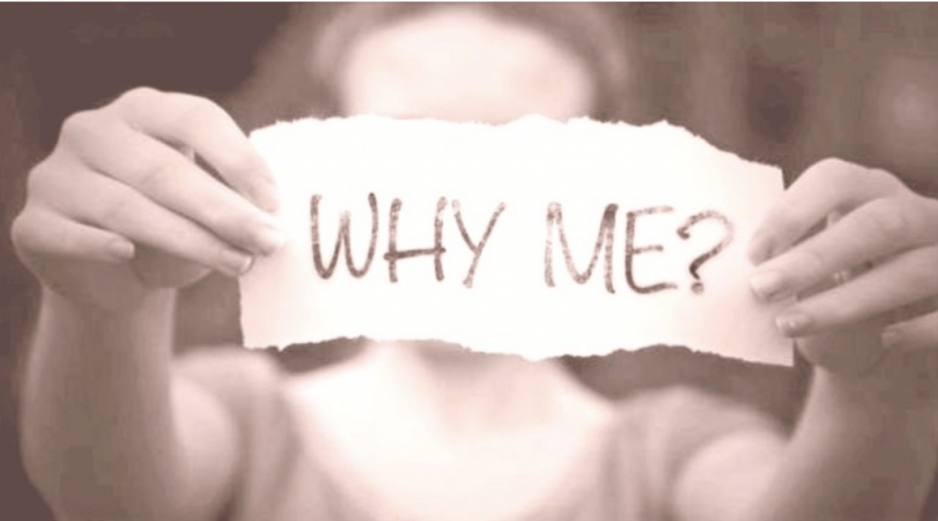
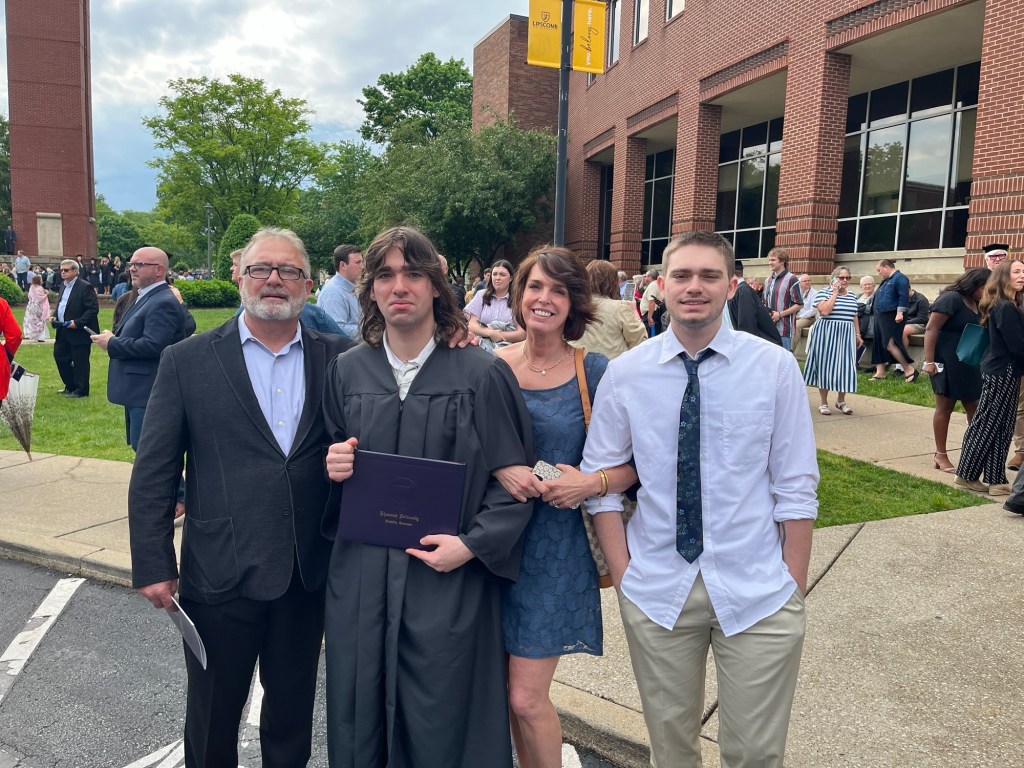
I am honored to share that my story, “Why Not Me?,” will be included in Women With Voices, Volume 1, launching January 23, 2027.
When I was diagnosed with breast cancer at forty-nine, I spent weeks asking, “Why me?” I was healthy, active and doing everything I thought I was supposed to do. Cancer did not seem to fit into the life I had built.
Eventually, the question changed.
Why not me?
That shift did not make cancer fair or easy, but it helped me stop searching for a reason and begin facing what was in front of me. Writing became one of the ways I processed the fear, uncertainty and unexpected lessons that followed.
Since then, my experience with breast cancer—and later follicular lymphoma—has shaped my work as a yoga teacher, writer and cancer advocate. It led me to create Flow for the Fight, teach yoga for people affected by cancer and walk in the Susan G. Komen 3-Day.
Contributing to Women With Voices gives me another opportunity to turn a deeply personal experience into connection. My hope is that someone reading my story will feel seen, understood and a little less alone.
I am grateful to be included alongside other women willing to share their voices and their stories. I look forward to sharing more as the launch approaches.
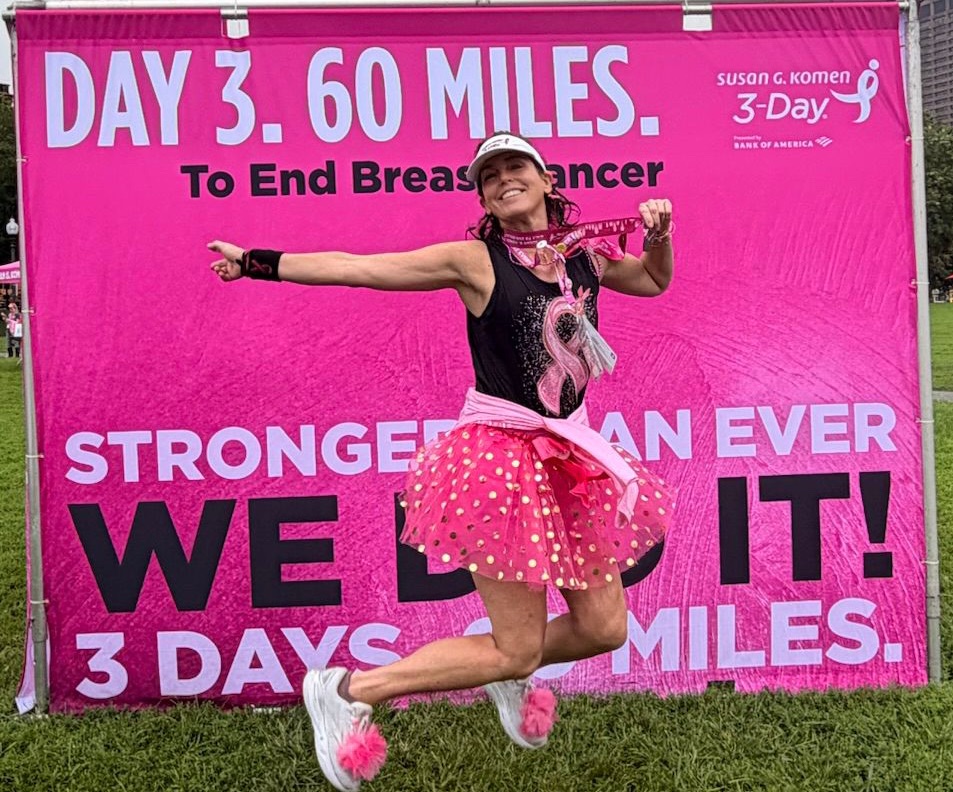
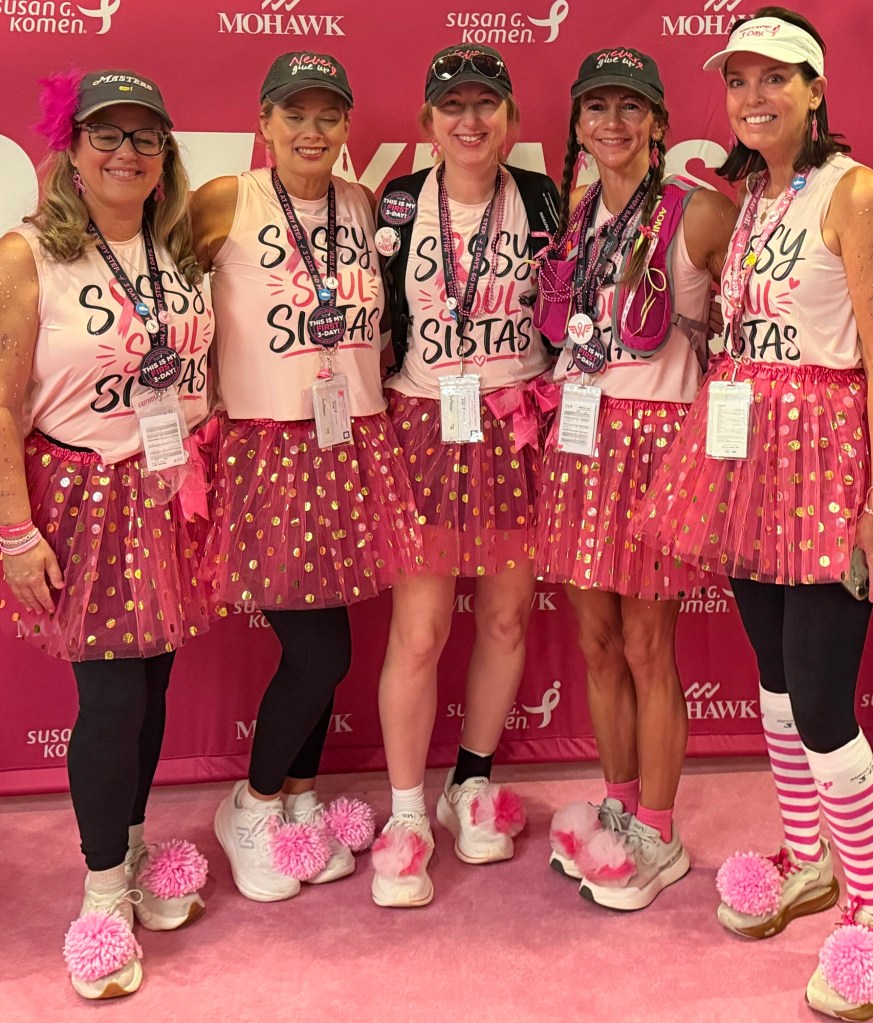
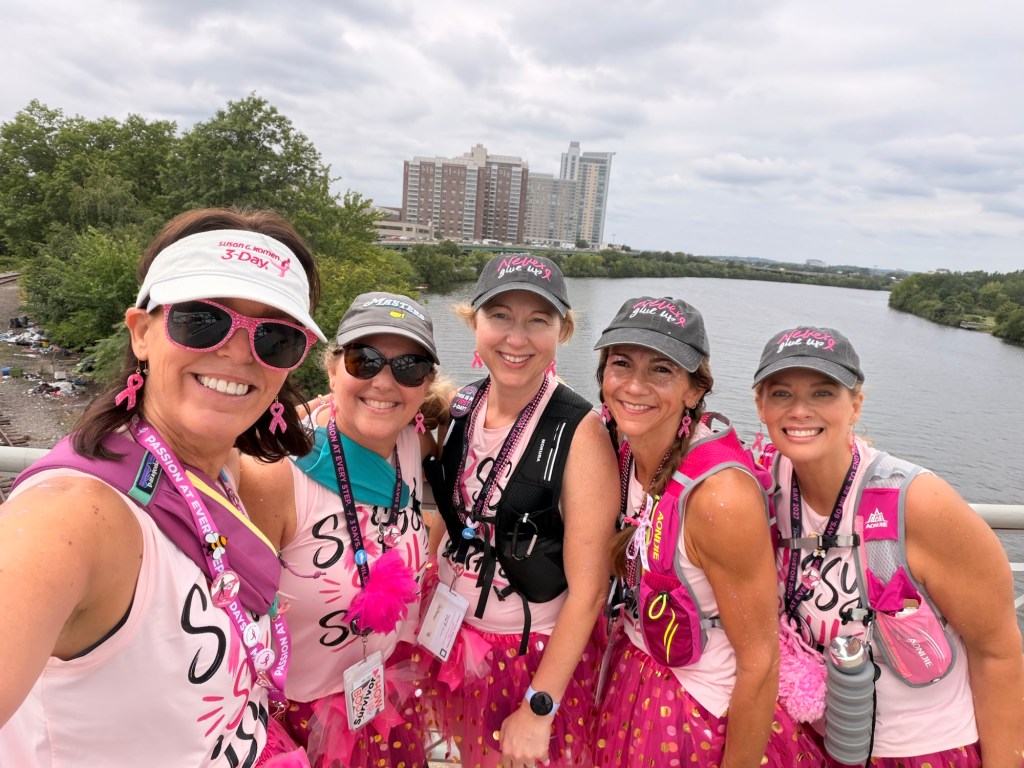
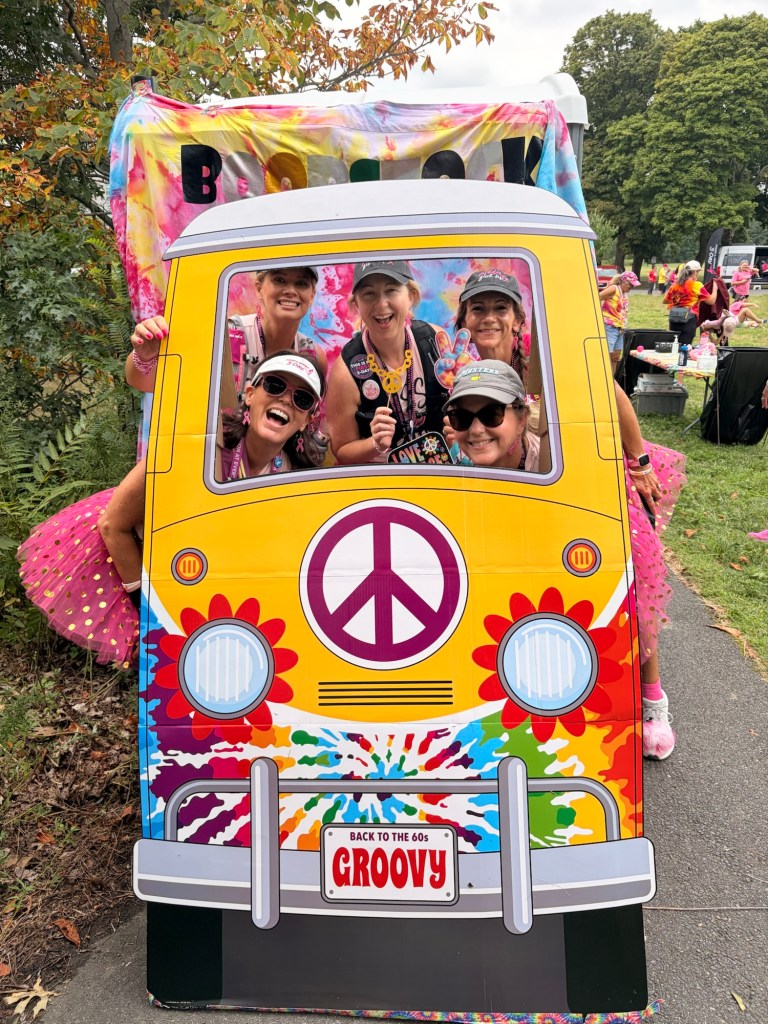
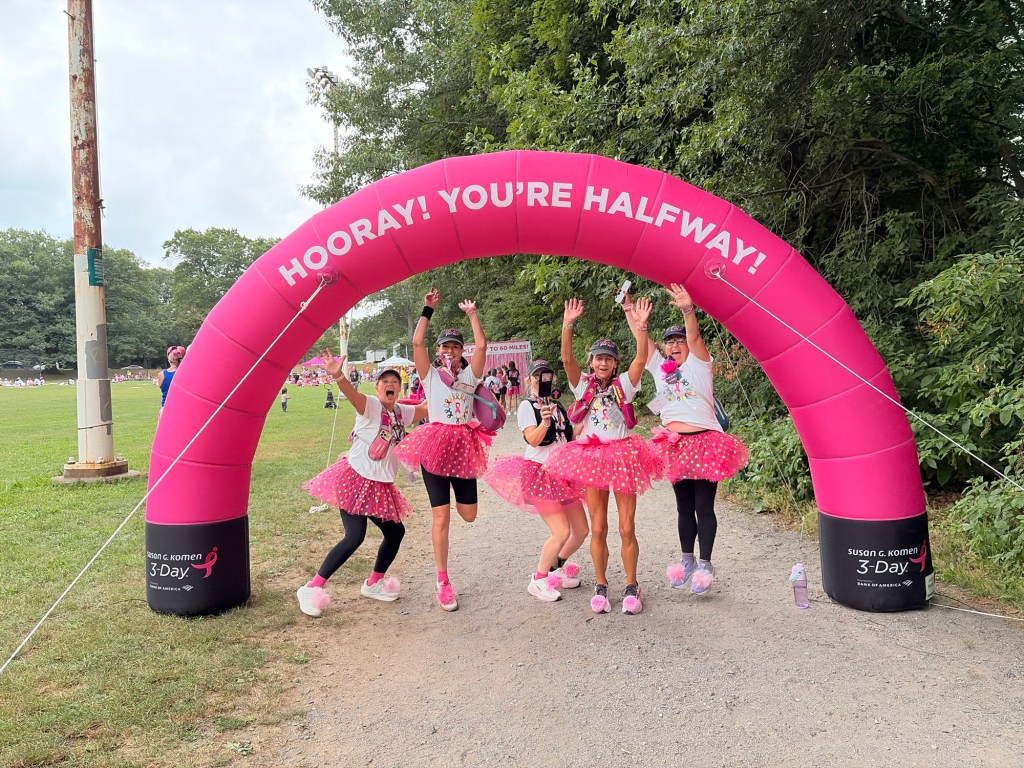
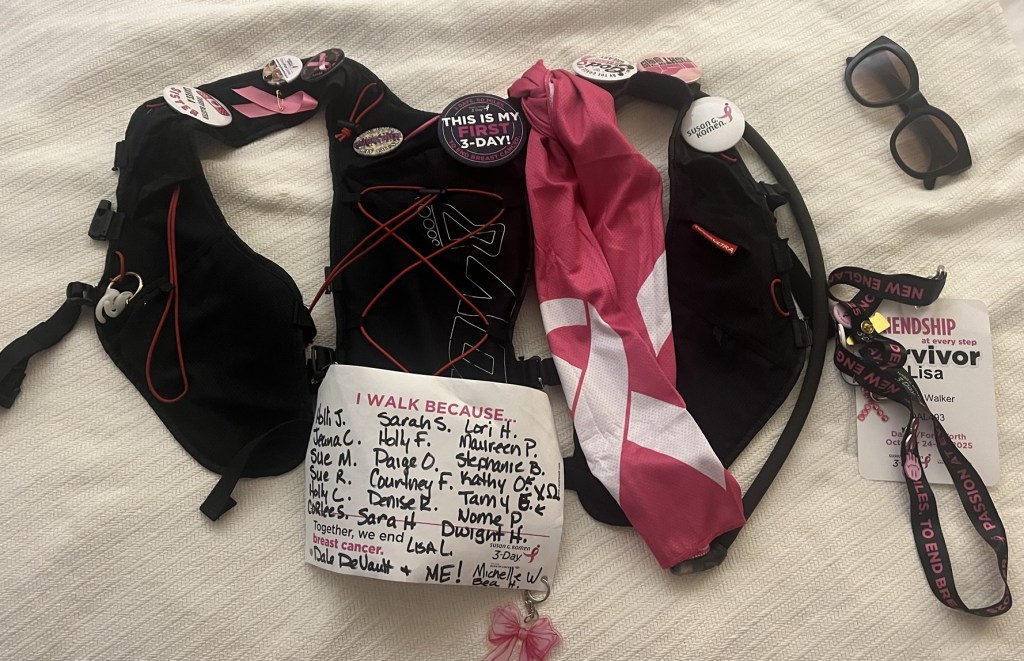
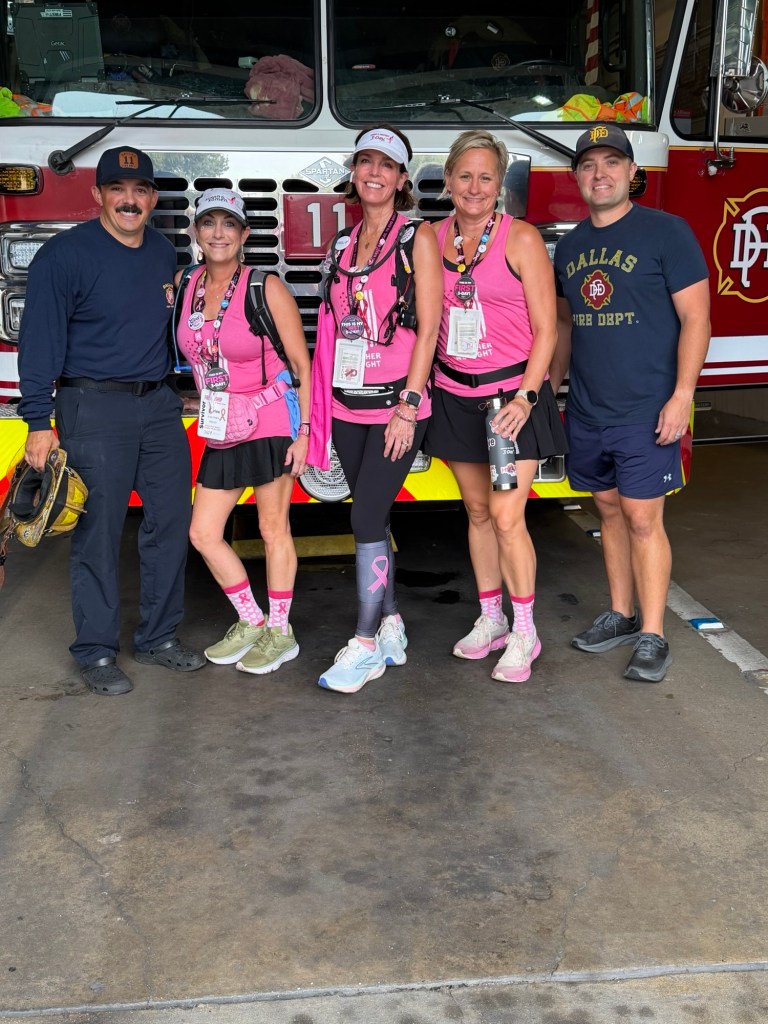
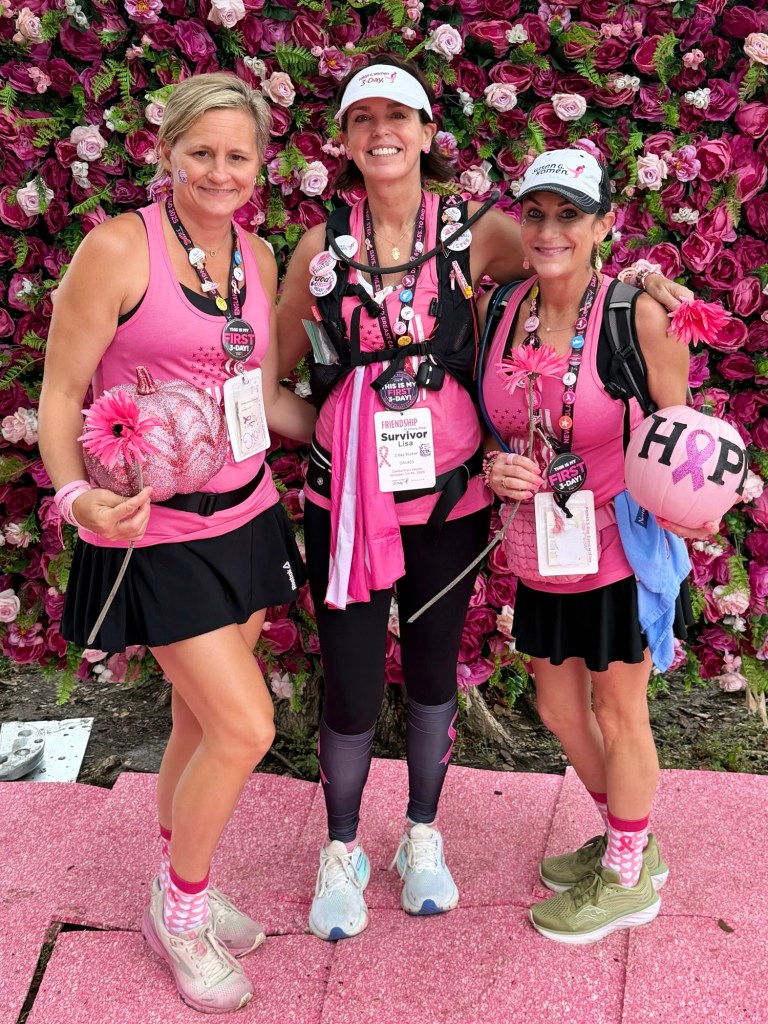
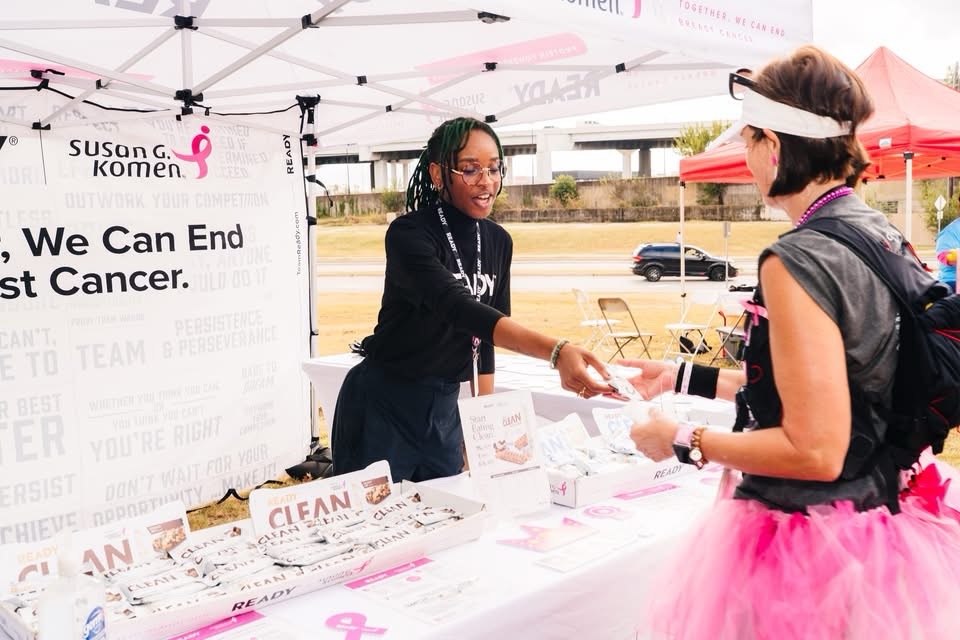
I completed another Susan G. Komen 3-Day, walking 60 miles through the streets of Boston with my friend and fellow survivor, Jeana, and our team, the Sassy Soul Sistas.
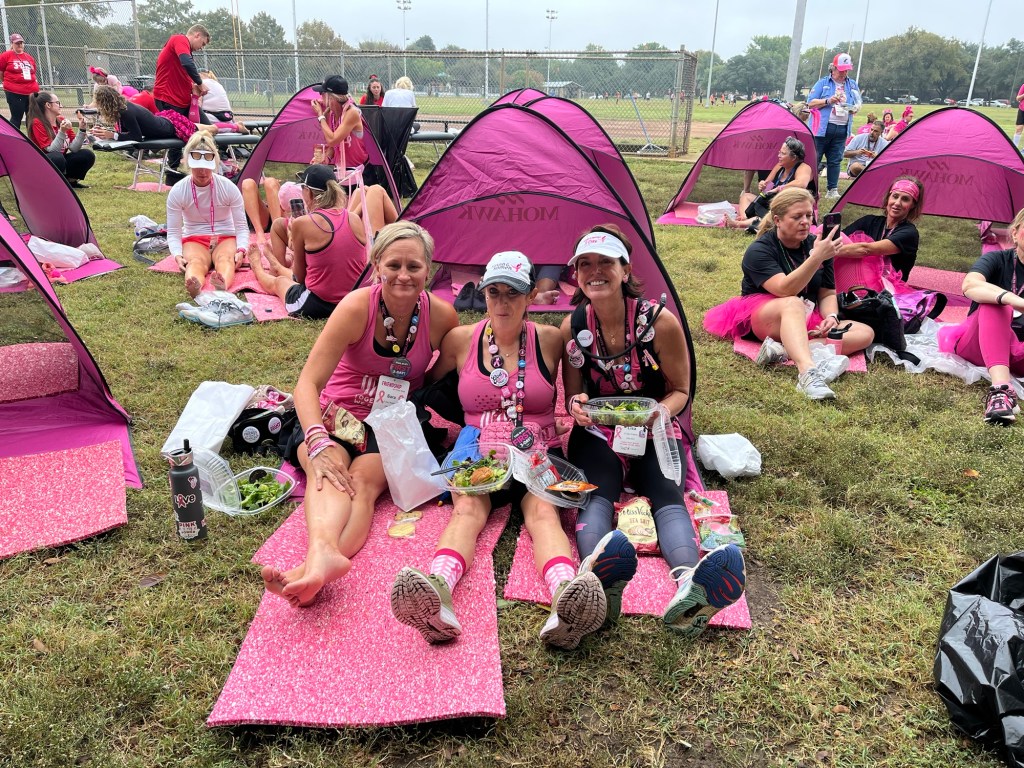
Over three days, we walked on tired feet, laughed through the hard moments and felt the encouragement of volunteers, supporters and complete strangers. The final five miles came with pouring rain, but by then there was nothing that could stop us. Every wet, exhausting step carried meaning.
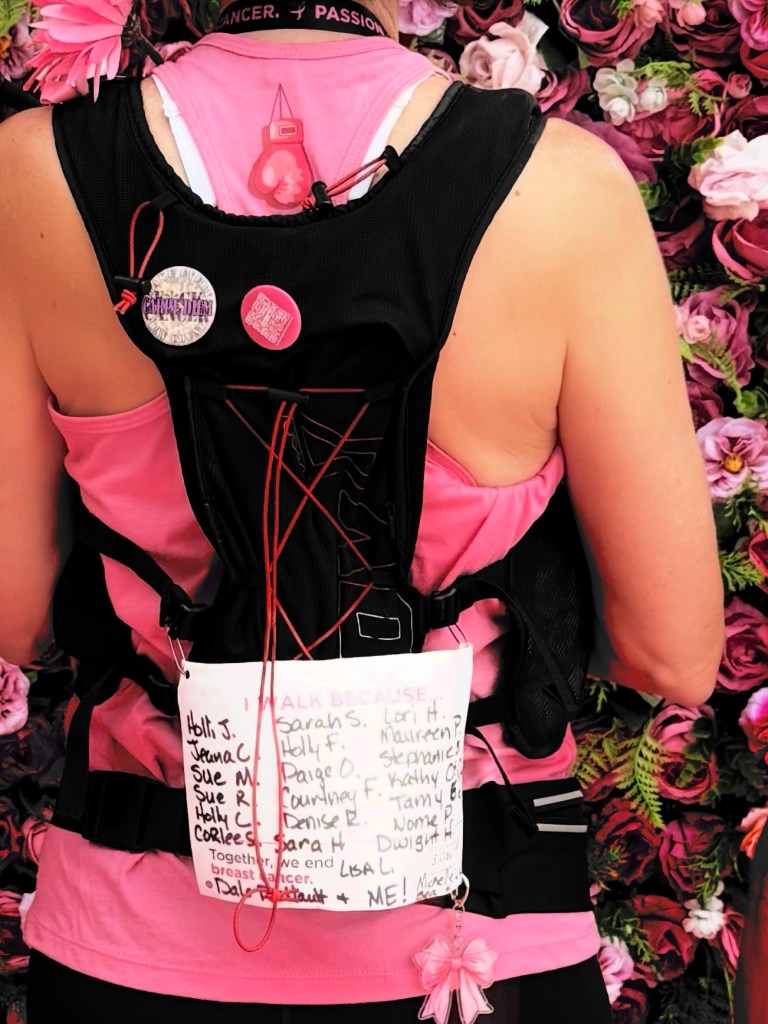
Walking as a survivor is emotional. I walked for those currently facing breast cancer, for the people we have lost and for the families and friends who stand beside us. I also walked with enormous gratitude for the research and treatments that have allowed me to keep moving forward.
Thank you to everyone who donated, encouraged us, followed our journey and cheered us across the finish line. Your support helped turn 60 difficult miles into something powerful.
Boston tested us, celebrated us and reminded us why we walk. I am tired, proud and grateful for every memory we made along those 60 miles.
And our journey is not ending in Boston. The Sassy Soul Sistas are officially registered for the Susan G. Komen 3-Day in Tampa in February 2028. Another city, another 60 miles and another opportunity to keep moving this mission forward.
After walking 60 miles in the Susan G. Komen 3-Day in Dallas–Fort Worth, I came home inspired to keep moving, connecting and supporting the breast cancer community.
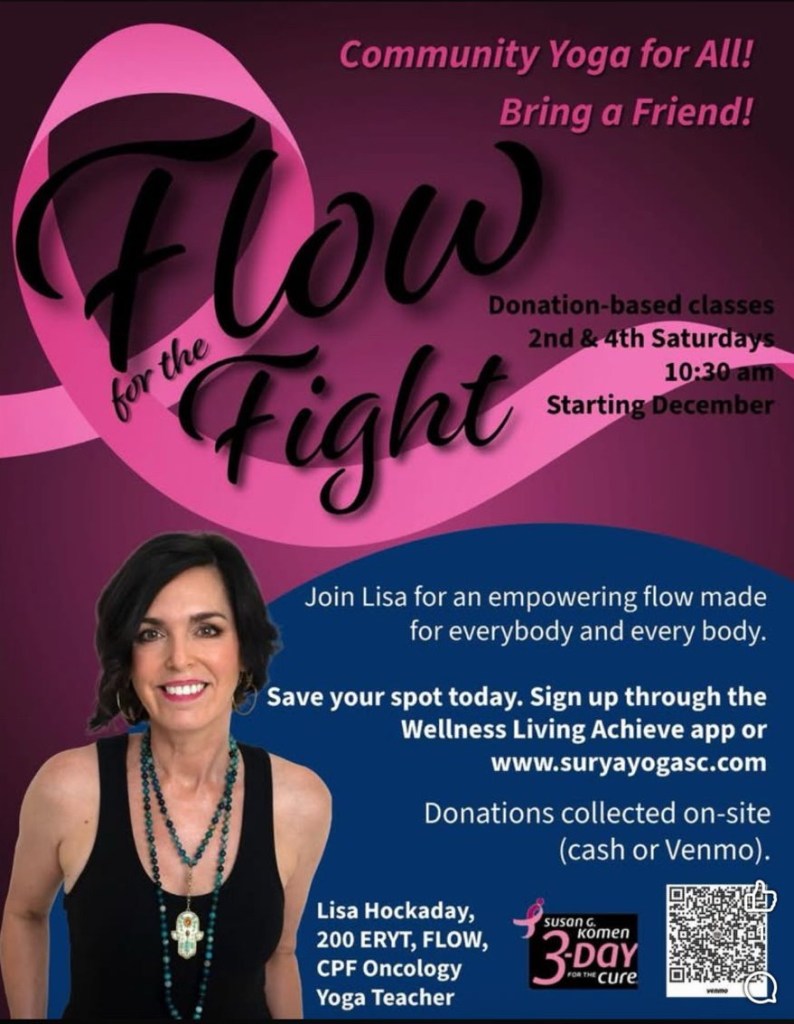
In November 2025, I began inviting my community to join me for Flow for the Fight. On December 13, we held our first class.
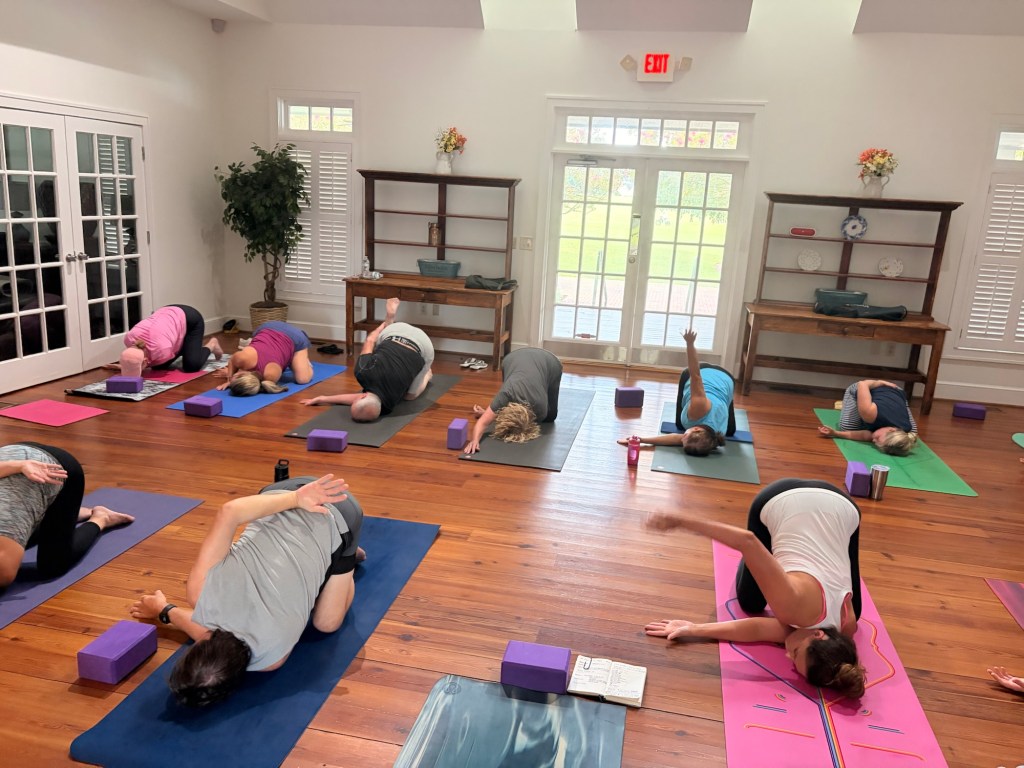
I created Flow for the Fight as a donation-based yoga series where movement and purpose meet. Each class welcomes people of all experience levels to breathe, move and build community while raising awareness and funds for cancer support.
Beginning with our first class, donations from Flow for the Fight have supported Susan G. Komen. This cause is deeply personal to me. As a breast cancer survivor who is also living with follicular lymphoma, I know how much research, advocacy and community support matter.
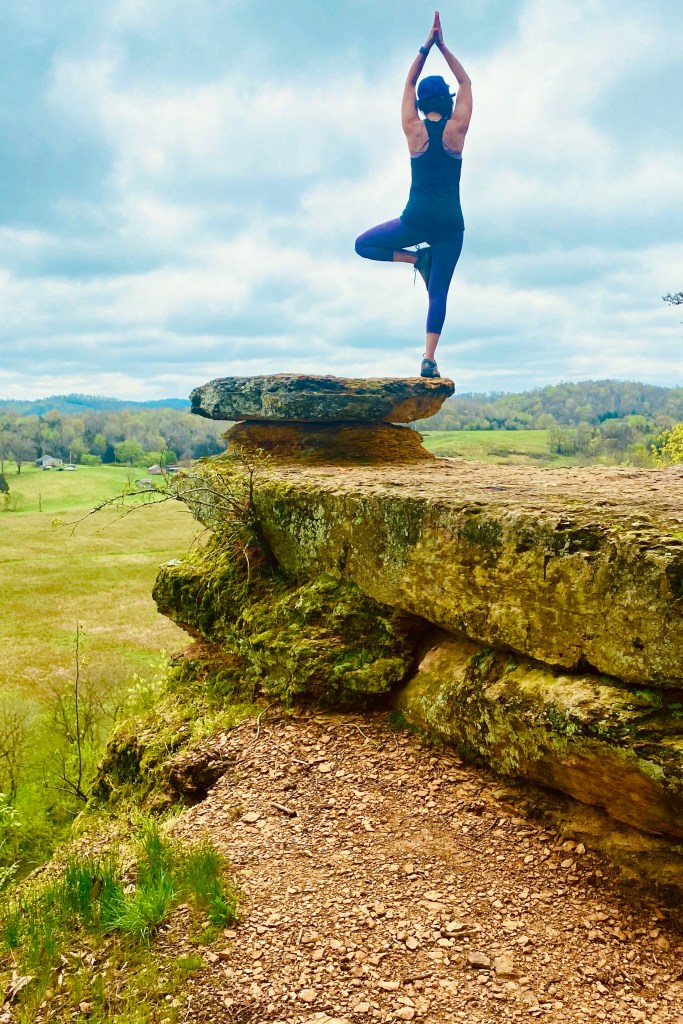
Yoga helped me reconnect with my body through diagnosis, treatment and recovery. As an Advanced Yoga for Cancer-certified instructor, I want to share that practice in a way that feels accessible, encouraging and meaningful. You do not need to be flexible or experienced. You only need to show up as you are.
My hope is that Flow for the Fight will grow into more classes, more communities and more opportunities to turn movement into action.
Thank you to everyone who joined that first class, donated, shared the invitation or encouraged this idea. Every breath, every contribution and every person who helps spread the word moves this mission forward.
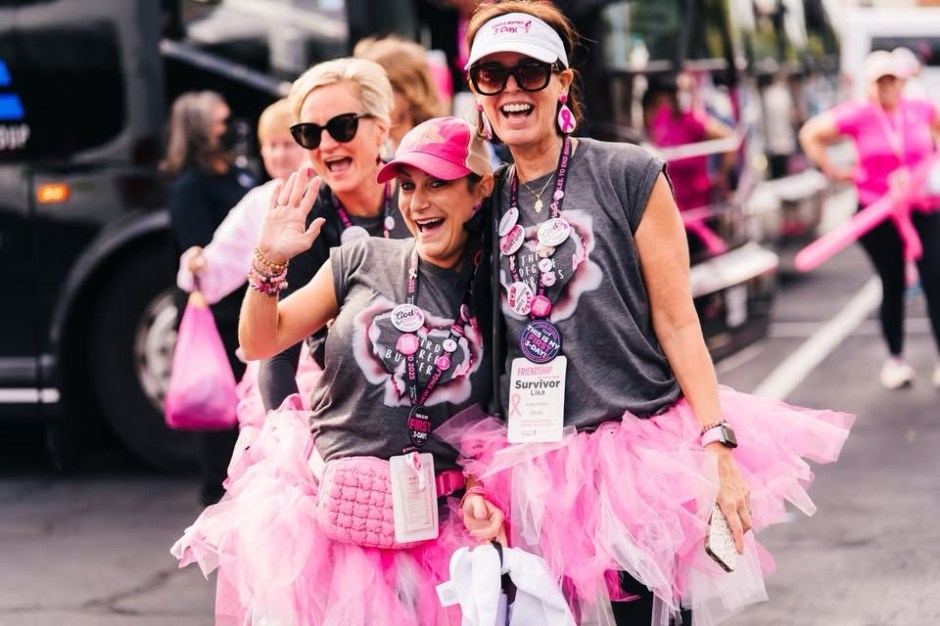
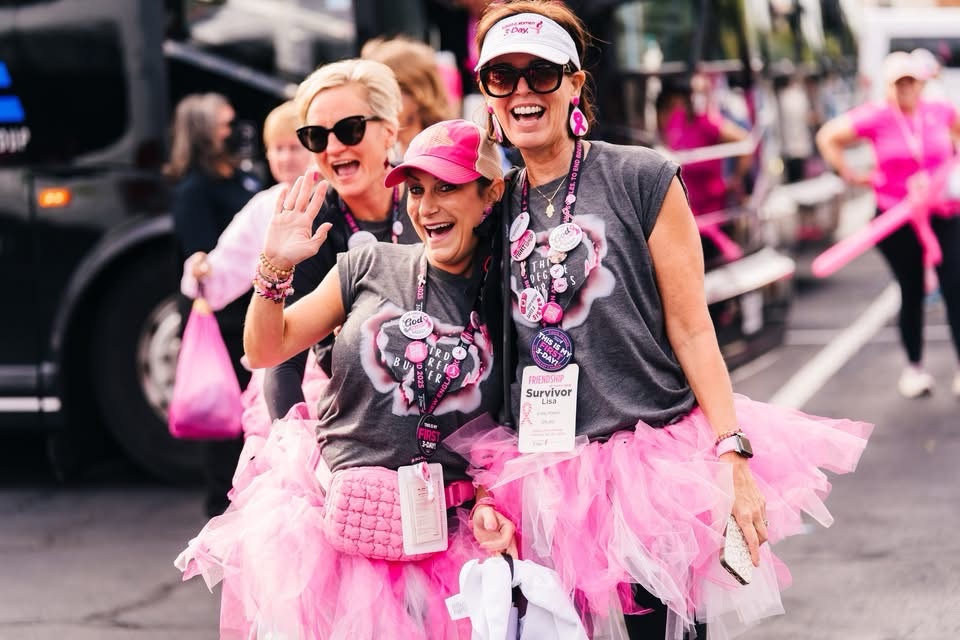
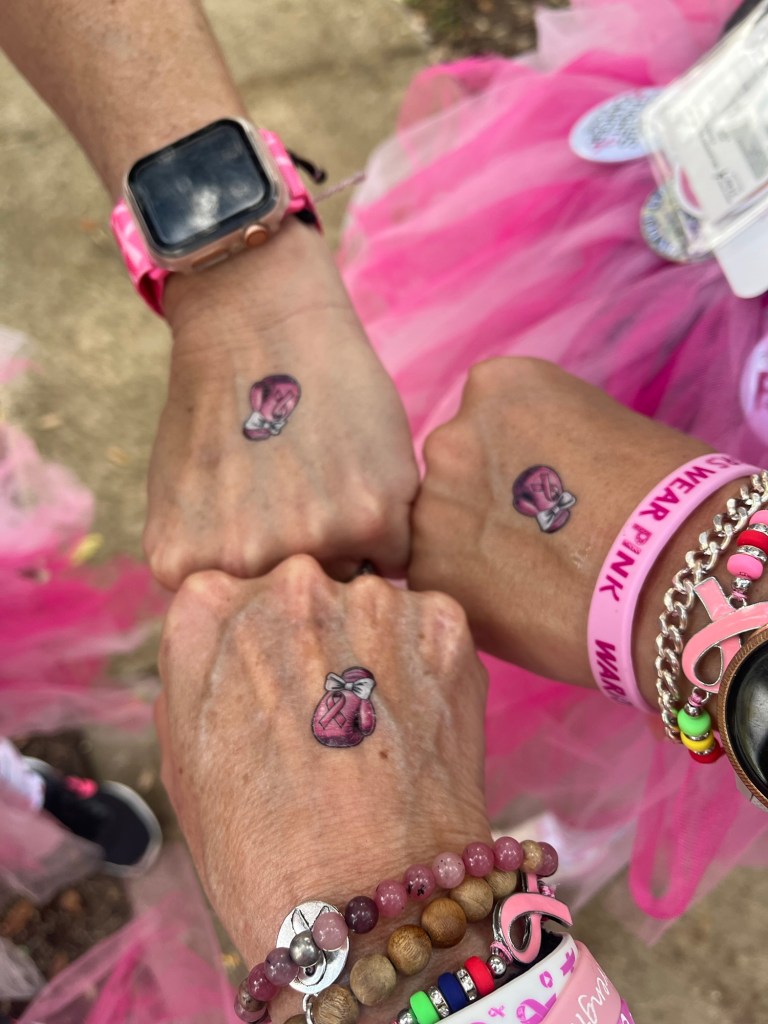
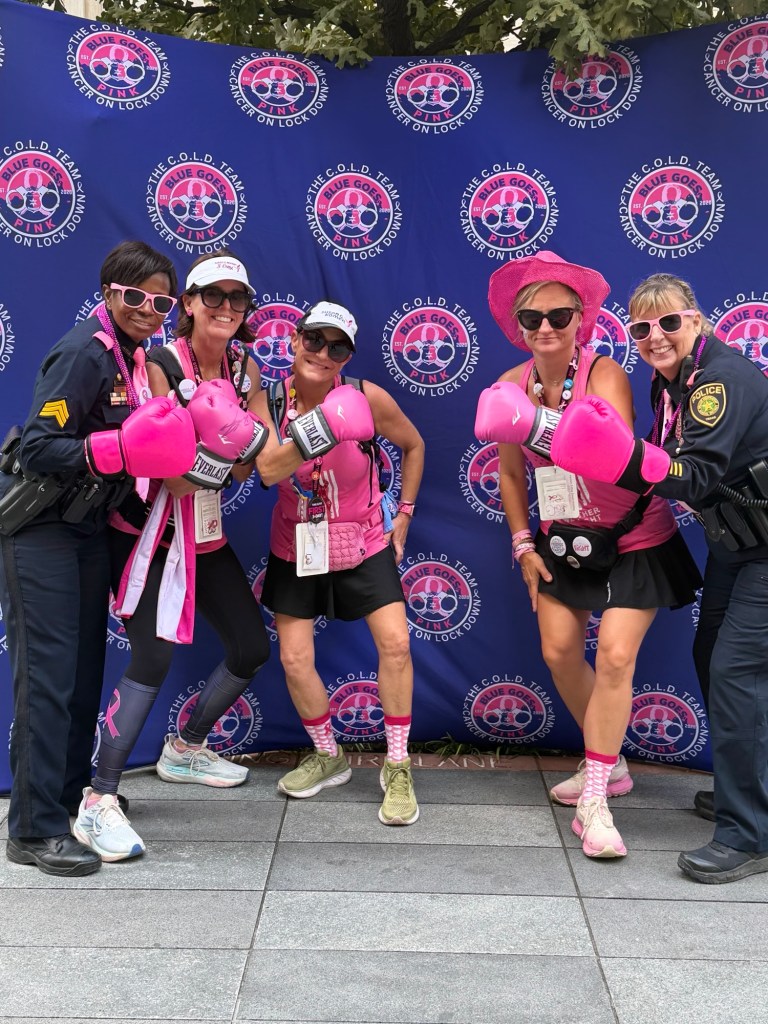
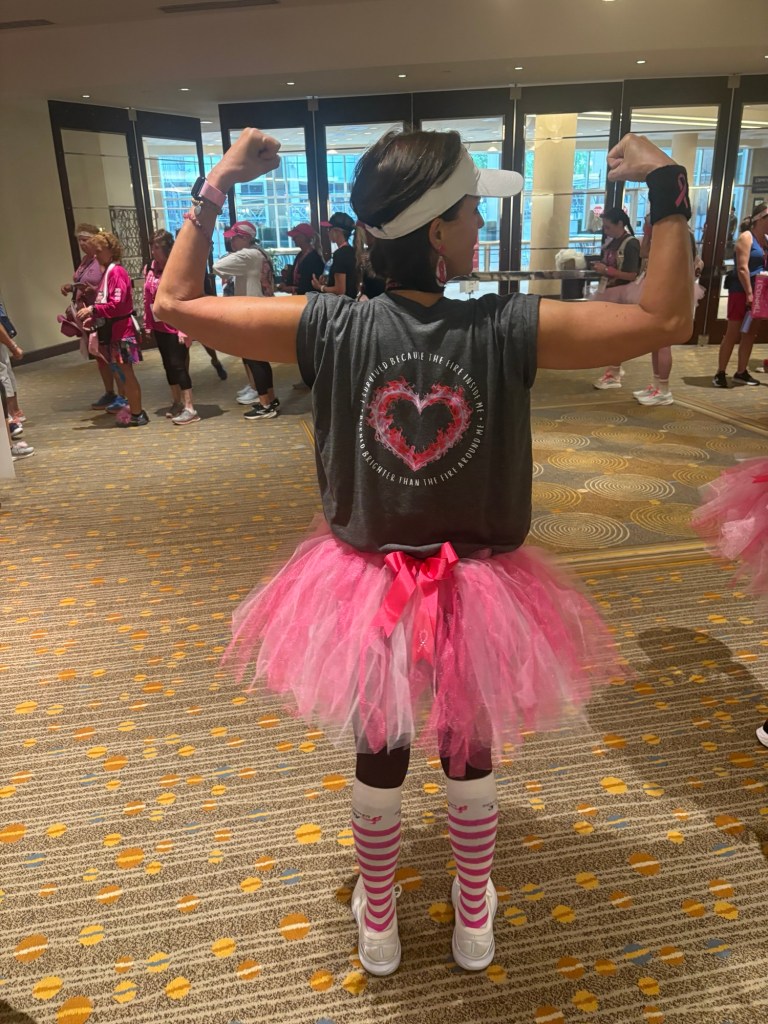
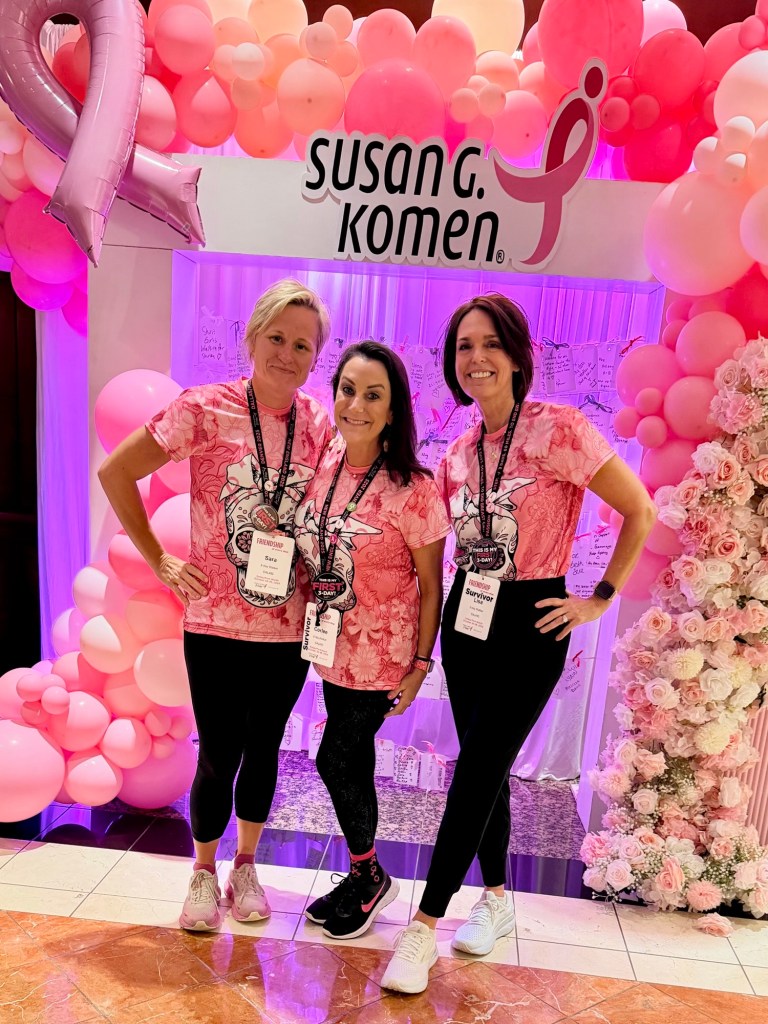
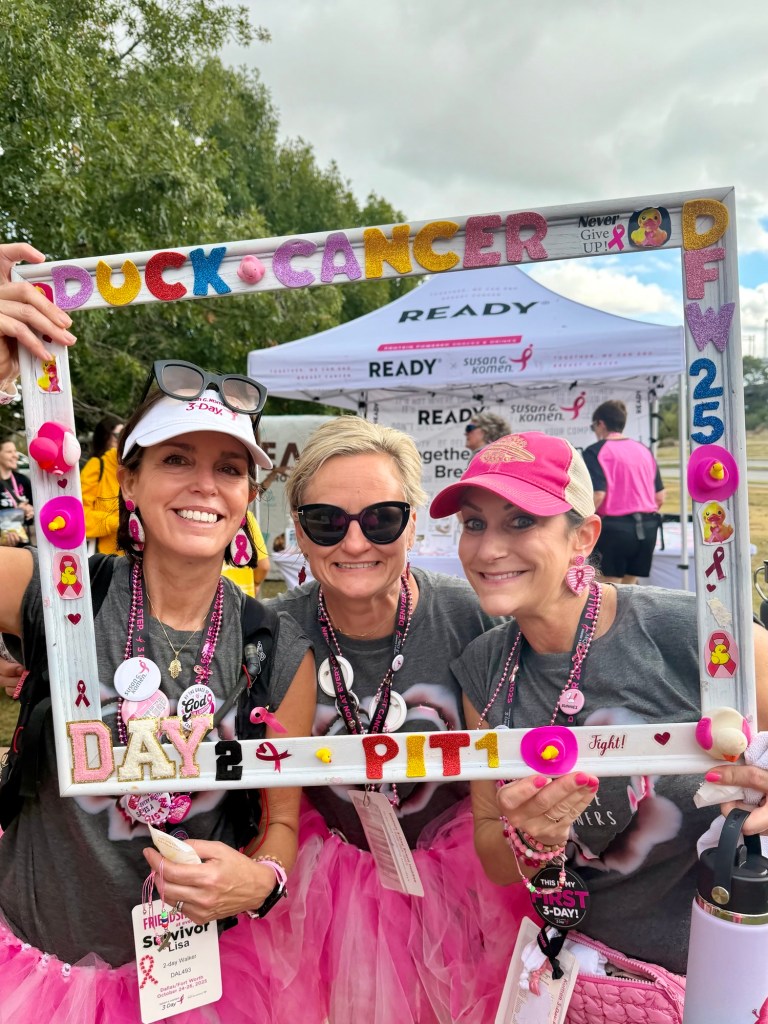
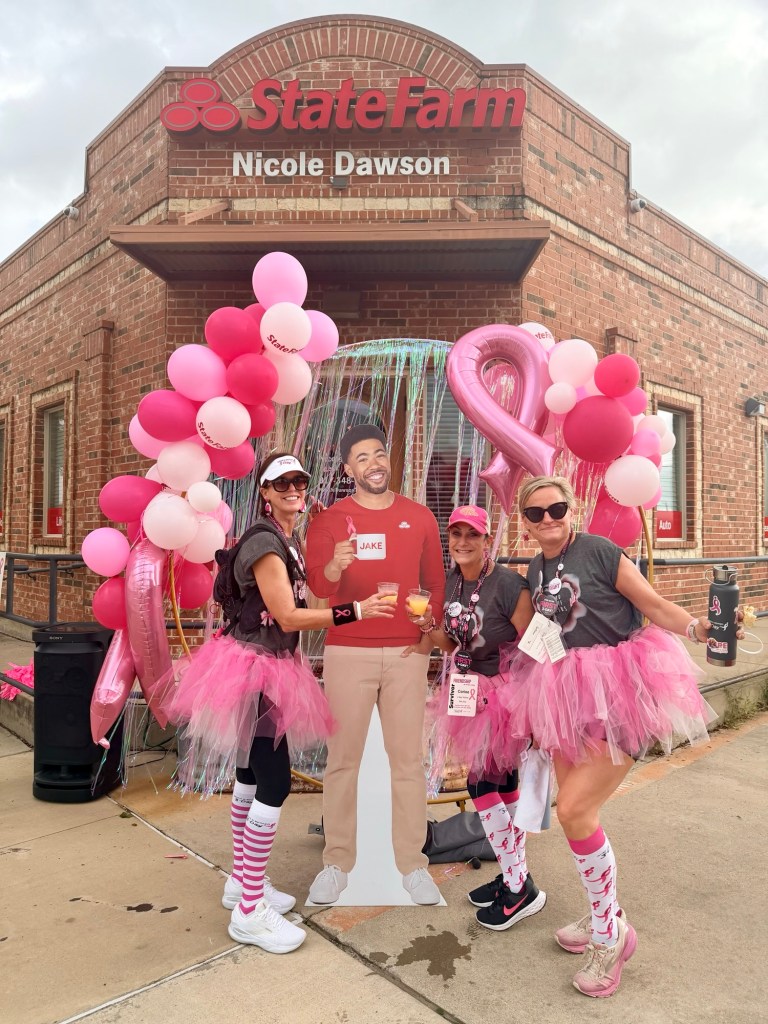
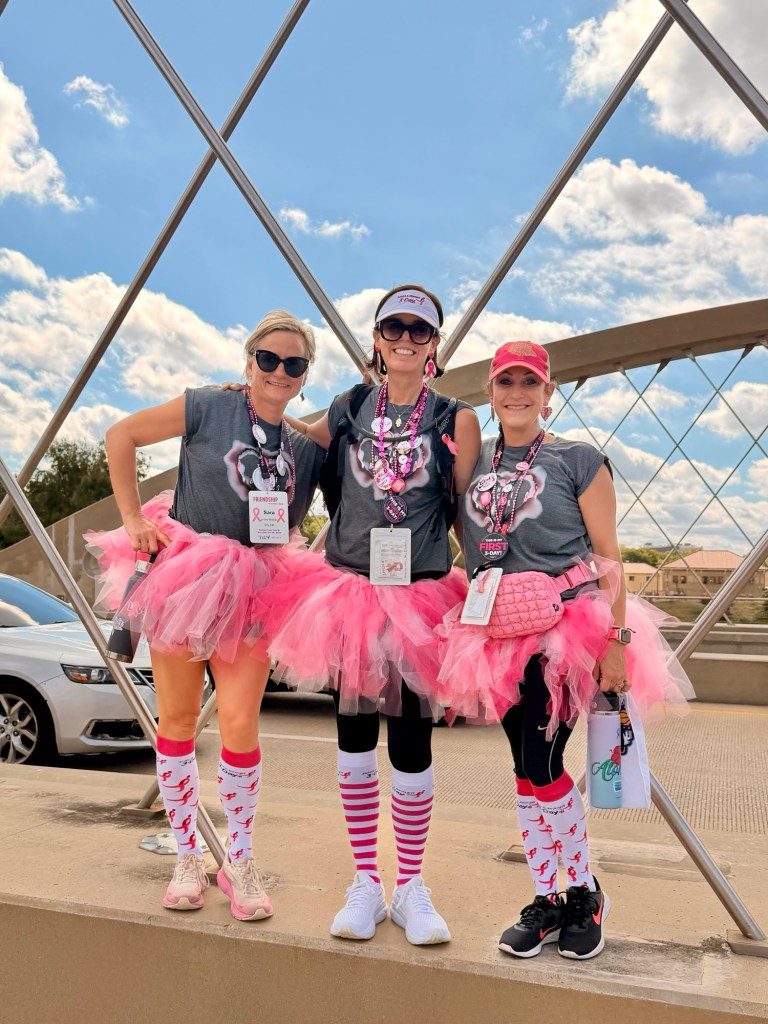
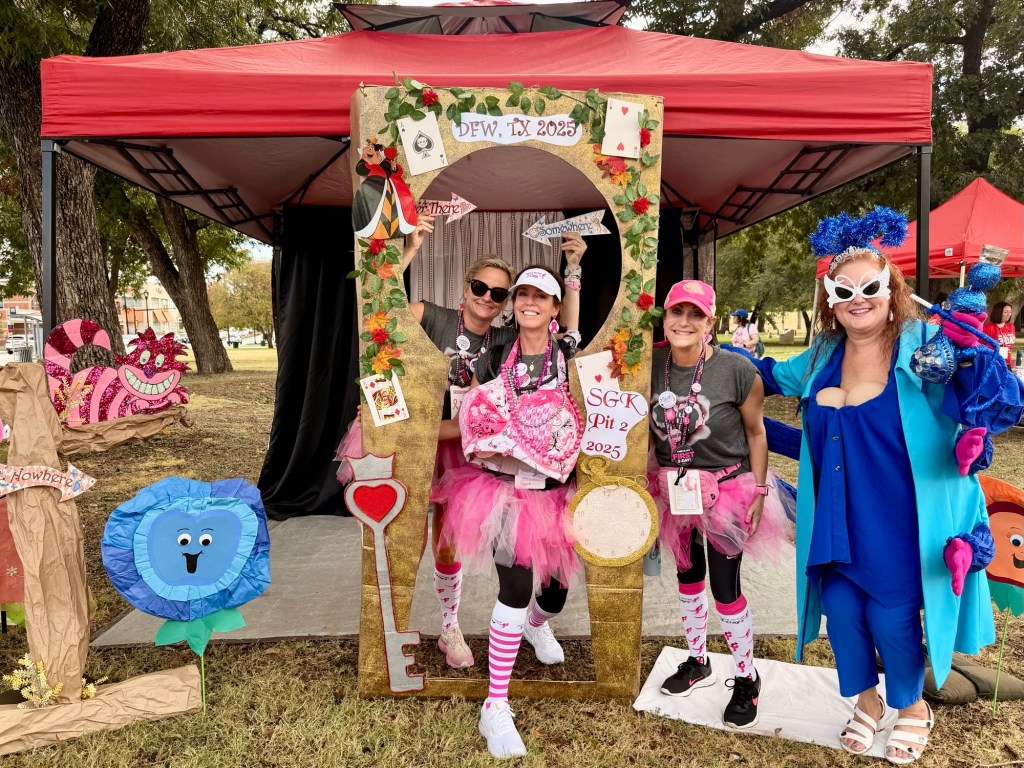
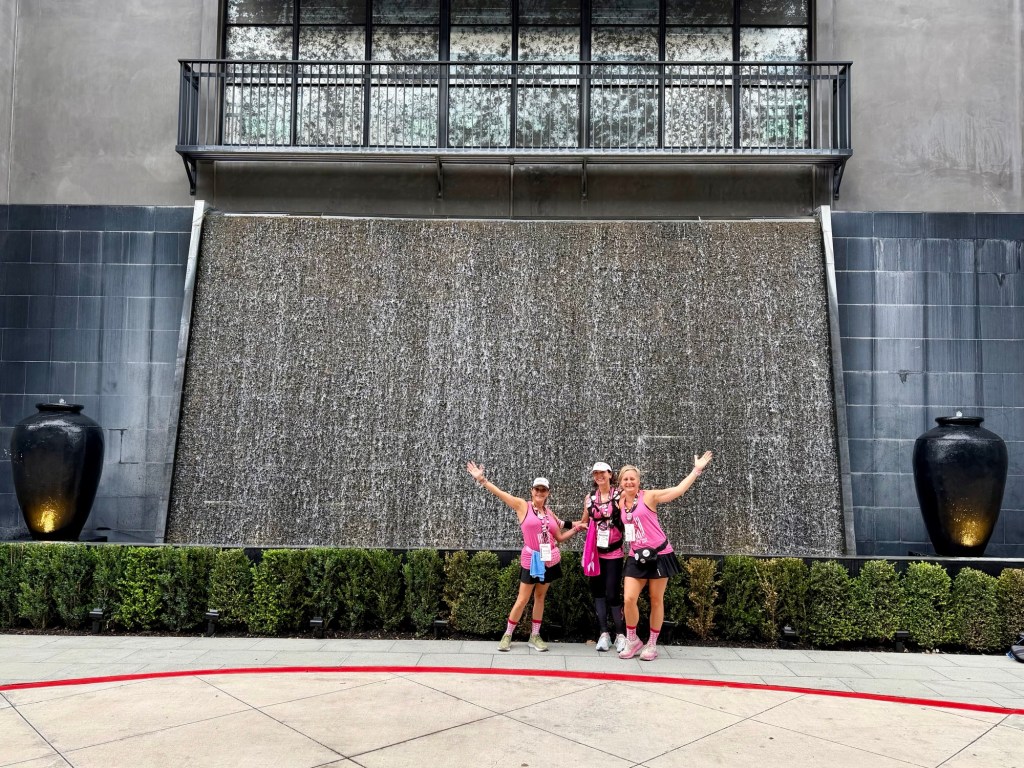
What an unforgettable weekend! The Susan G. Komen 3-Day in Dallas/Fort Worth was equal parts inspiring, exhausting, and downright fun — and I couldn’t have done it without all of you. 💕
From the moment we laced up our sneakers (and yes, we wore pink tutus 😅) to the final steps of the walk, your support was with me every step of the way. Every donation, encouraging message, and cheer sent my way carried me through the toughest miles and kept my spirit soaring.
My reminder of why this fight matters so much.
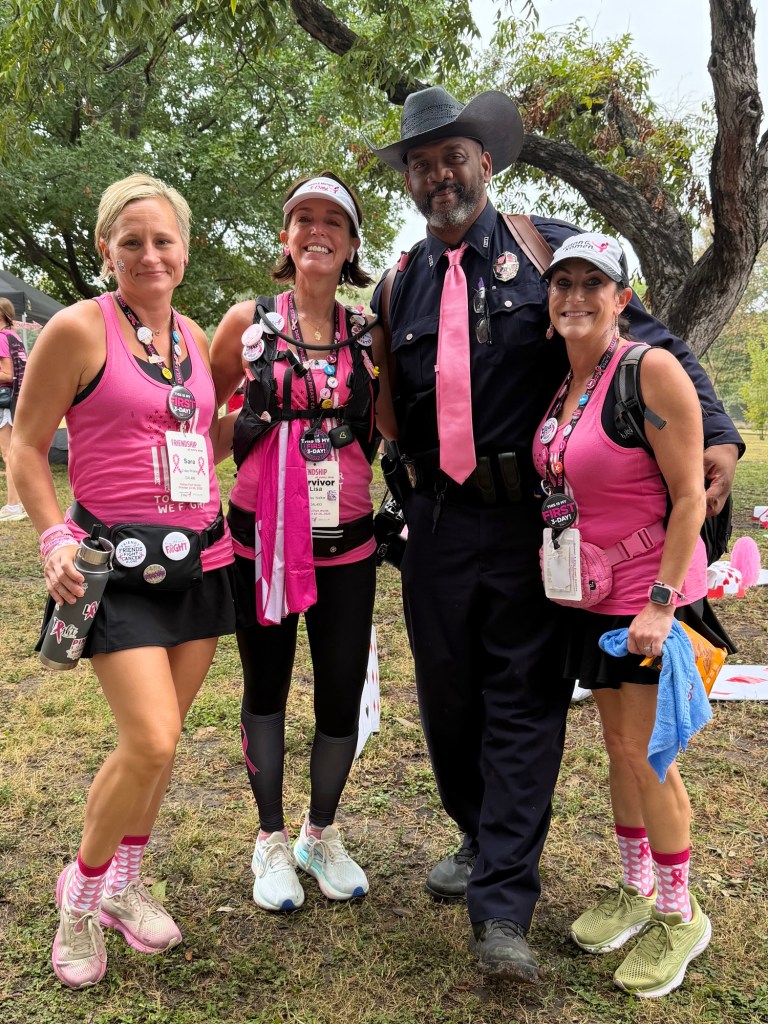
Walking as a survivor is a special kind of experience. Every smile, every high-five, every burst of pink along the route was a reminder of the hope, strength, and love surrounding all of us who are part of this journey. It’s a celebration of the fighters, the survivors, and the friends and family who support us — people like you!
Thank you for being part of this journey. I hope you’ll join me—whether in person or in spirit—for the Susan G. Komen 3-Day in Boston in August 2026!
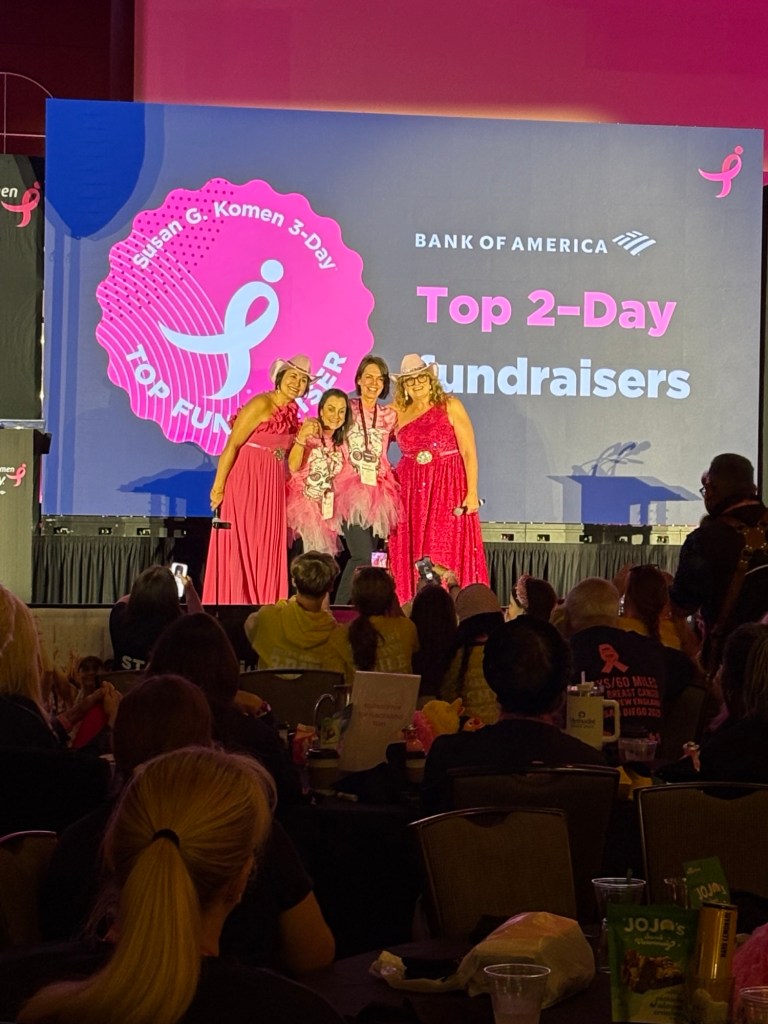
One more reason to celebrate: Corlee and I were recognized as top rookie fundraisers, and the Dallas/Fort Worth 3-Day raised $2.1 million to support Komen’s work in research, patient care, advocacy and community health.
#The3Day #PinkPower #ThankYou #pinkbubble Susan G. Komen 3-Day #koman3day #the3day
Recently, I submitted my original pathology for a genomic test designed to estimate whether I would benefit from extending endocrine therapy beyond five years.
That tiny daily pill, Arimidex, has been a constant companion. It has been an important part of my treatment—but also, literally and figuratively, a hard pill to swallow.
The test results gave me a gift I never expected. After reviewing them with my doctor, I learned that I could stop taking Arimidex and close that chapter.
This is big.
I was originally told 10 years. Now, at the five-year mark, I get to close the medicine cabinet and open something new.
Reaching five years is an important milestone. I am still a survivor, still moving forward and deeply grateful for the research and medical progress that made this moment possible.
In honor of this milestone, I’m heading to Dallas in October for the Susan G. Komen 3-Day!
I’m walking not only for myself, but for those who are still in treatment, those just beginning and those holding space for someone they love.
I walk for life.
For breath.
For every step we take after the storm.
When I originally shared this post, I was raising money to support breast cancer research, patient services, advocacy and community health. Every donation and encouraging message helped carry me toward those 60 miles.
Update: I completed the Dallas/Fort Worth 3-Day in October 2025. I remain deeply grateful to everyone who donated, encouraged me and followed the journey. Our team is now registered for the Tampa 3-Day in February 2028.
Last Friday, I had a CT scan. This Friday, I’ll meet with my doctor to learn how well the treatments worked. My doctor explained that a reduction of 50 percent or more would indicate that the rituximab was producing a strong response.
Before I tell you how I’m feeling, here are a few highlights from my weekly treatments!
I’ve been moving through a sleepy haze, but my people found ways to make every week uplifting, fun and bearable.
Y’all were with me in spirit through the meals, care packages, thoughts and prayers. I certainly felt the love.
Overall, I tolerated the treatments fairly well. I developed a routine: I slept for two days and then gradually resurfaced during the remainder of the week—just in time for the next treatment.
I experienced fevers, an upset stomach and flu-like aches. Those days were difficult, but manageable as I held on to hope for a positive response.
Deep in my soul, I feel that this treatment is working.
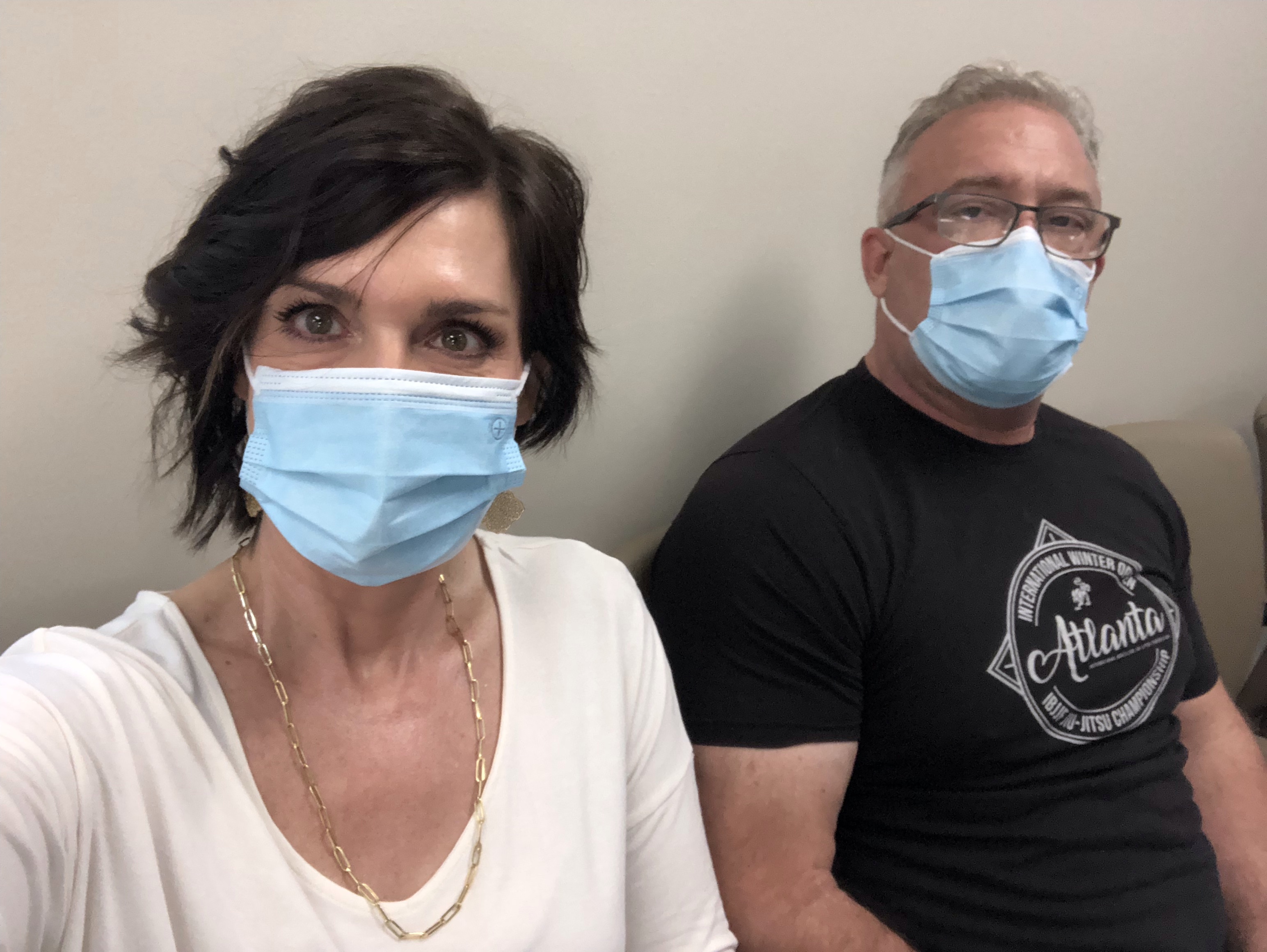
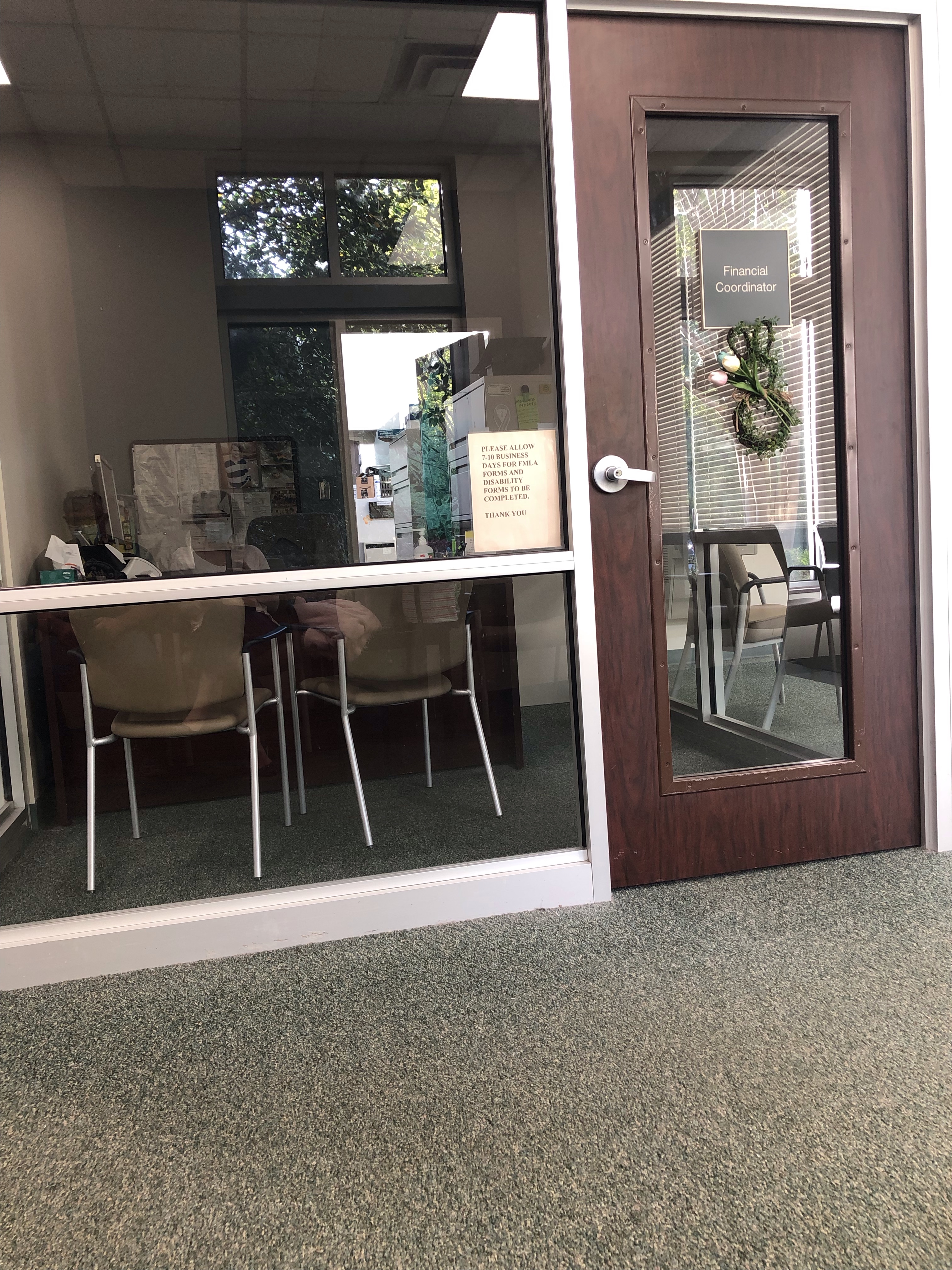
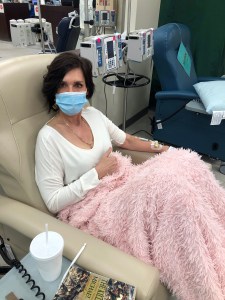
Waiting for the Finance Counseler to come to work. Trust us we’re smiling! Really we are!
Yes, I was anxious. Yes, I got very little sleep.
But my first treatment wasn’t nearly as bad as my mind had imagined. I didn’t know what to expect, and I hadn’t found many firsthand accounts of the experience.
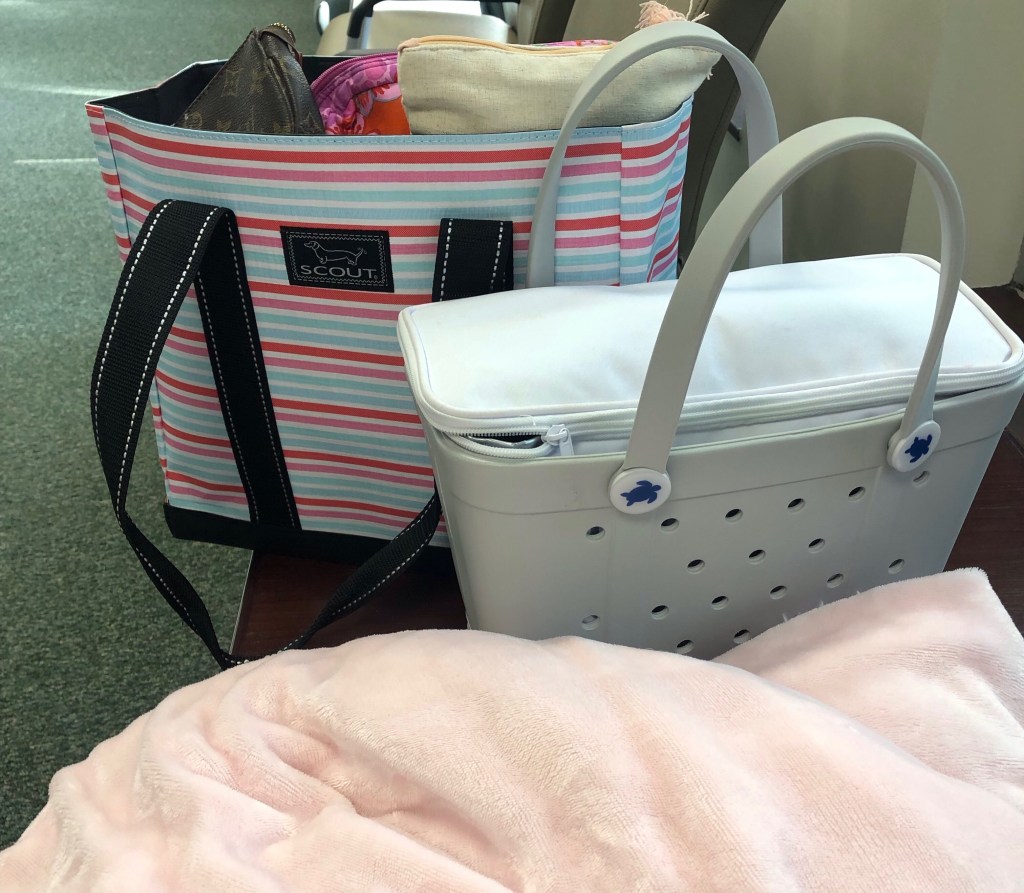
Overpacked?
I prefer to say I was prepared for anything an infusion might bring: starvation, frigid temperatures, extreme heat, dehydration, boredom or dry skin.
I fixed my hair, added a little glam and wore something cute but comfortable.
Why not?
We arrived at the cancer center at 7:45 a.m. and were immediately hit with an insurance and billing problem. It was unsettling at first, but the issue was resolved.
Then, just like that, the director waved us through as though we had paid admission for a roller-coaster ride.
We followed tight twists and turns through doors, flashing lights and a hallway leading to a door marked “Infusion Room.” Our imaginary coaster slowed almost to a stop. It hung there, and my heart skipped before the big drop.
The door opened into a large room filled with more than 30 vinyl recliners.
We waited for the financial counselor to arrive.
Trust us—we’re smiling!
Really, we are.
I met my nurse, Katie. I consider myself qualified to judge a good nurse by her needle work, and she was excellent.
She explained the infusion process and warned us that it would be a long day. We expected to be there for five and a half to eight and a half hours.
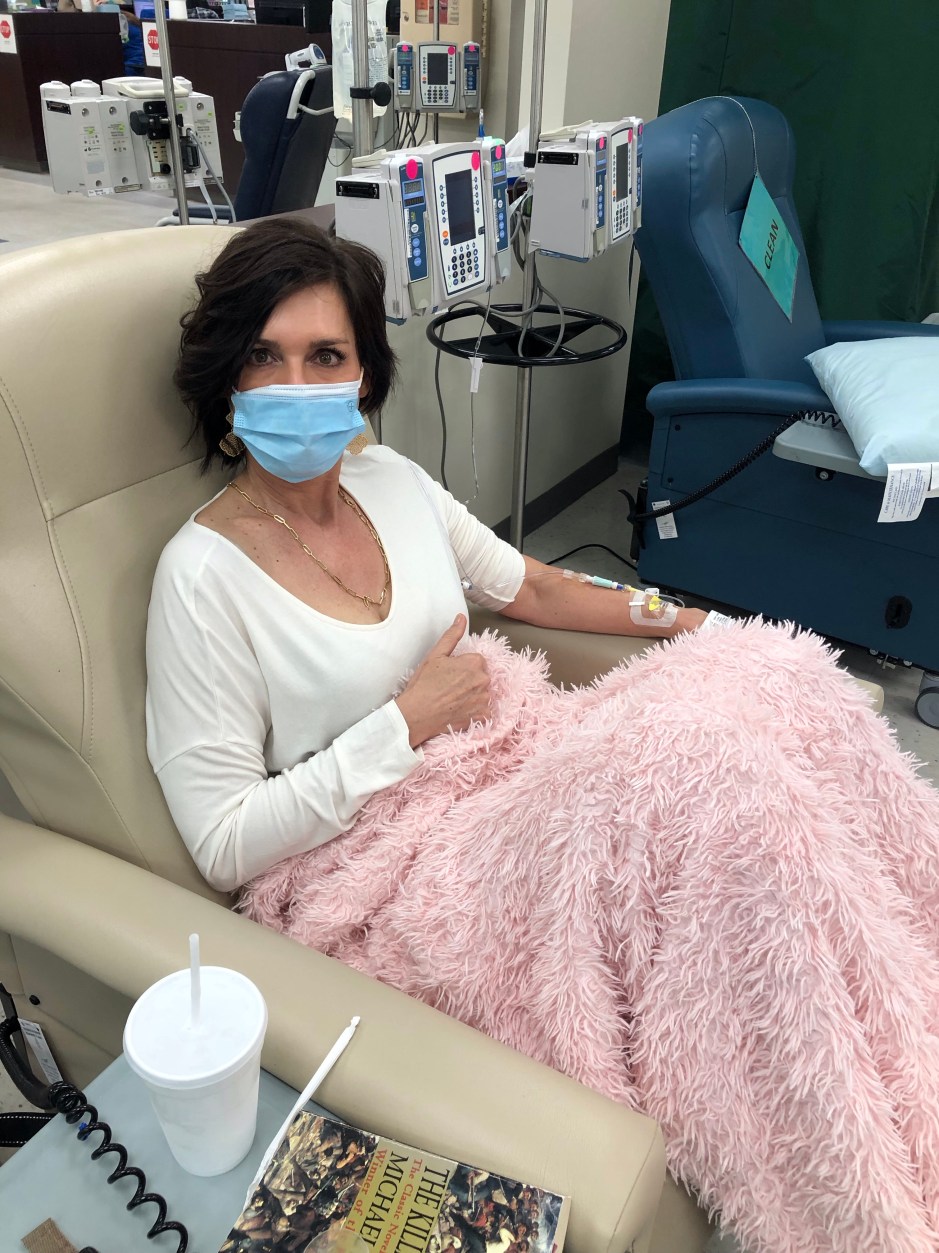
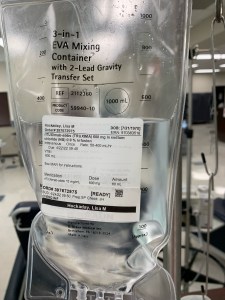
Before starting the rituximab, I received medications through my IV to help reduce the risk of an infusion reaction. I felt loopy and drugged, but I was ready.
The rituximab began with a very slow drip so my body could adjust. Nurse Katie checked my vital signs every 30 minutes—all day long.
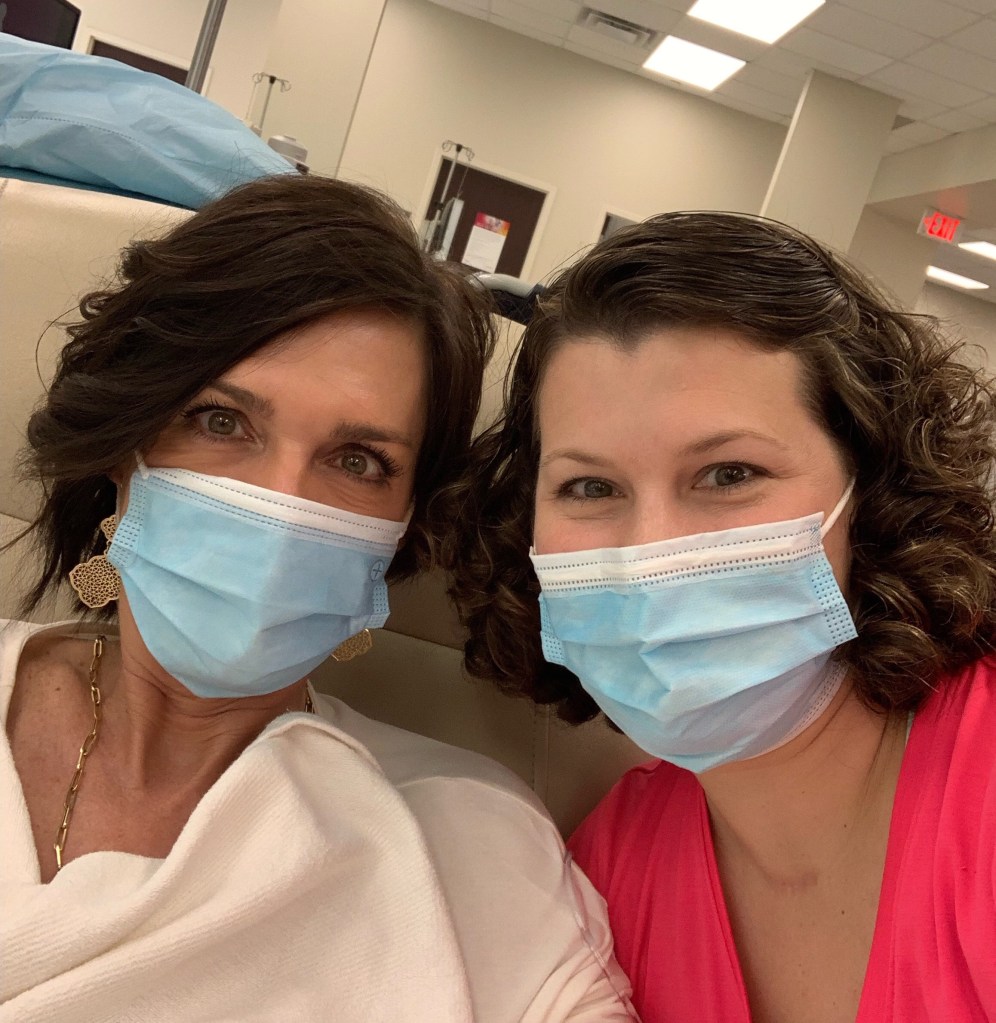
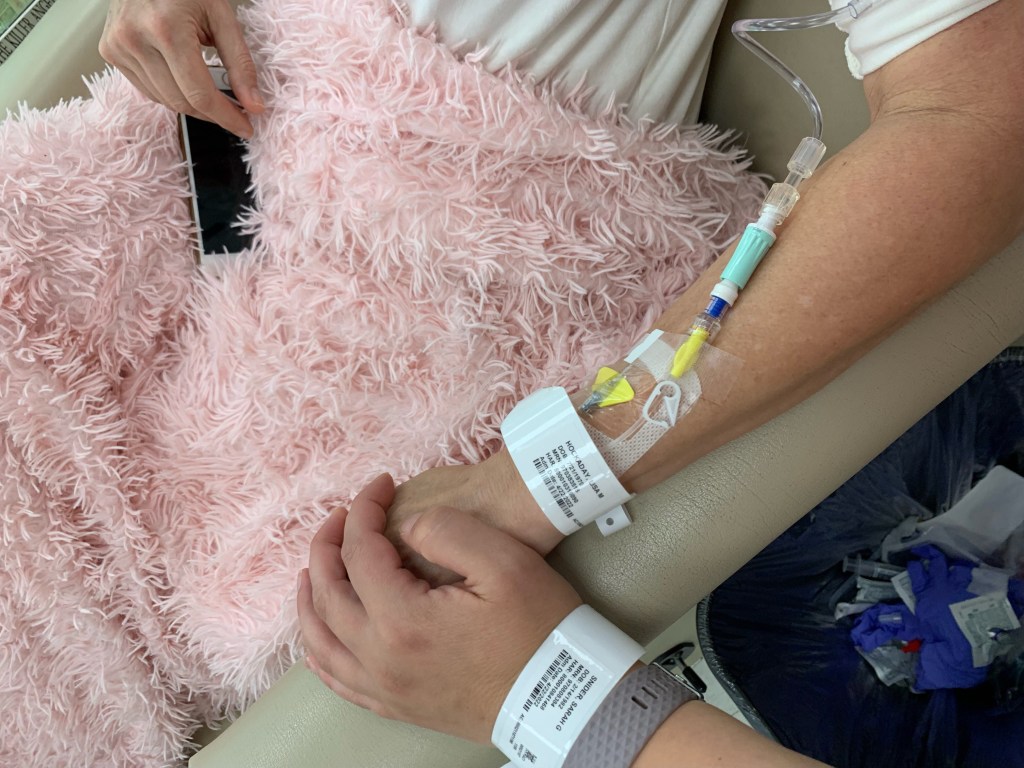
Bobby left to get Starbucks, and my warrior sister in pink, Sarah, sat with me. She had an appointment of her own at the cancer center and knows this place all too well.
Her visit meant so much. Sarah received treatment during the pandemic, when visitors weren’t permitted. She is one of the strongest warriors I know.
She held my hand and tucked warm blankets around me.
About 45 minutes into the infusion, my throat began to itch. I could feel welts forming inside my mouth, and swallowing became difficult. Then my ears started itching, and my sinuses began to swell.
When Nurse Katie checked on me, I told her what was happening. She immediately stopped the infusion and checked my vital signs.
I was experiencing a serious infusion reaction.
She gave me another antihistamine, but the symptoms didn’t improve. I was terrified that my body might not tolerate the medication, but she reassured me that infusion reactions can happen and that the team knew how to respond.
The infusion remained paused for more than an hour. My doctor prescribed a steroid, and the reaction began to subside.
When treatment resumed, the drip was even slower.
And time began to tick.
I wasn’t in pain, but I was restless. I tried reading, working on a word puzzle and even folding origami, but the steroid made it difficult to concentrate.
Bobby returned and dozed.
I didn’t.
I watched the clock as patients came and went throughout the day. They smiled and then returned to their everyday lives, as though treatment were simply another item on a to-do list.
I may not know those people, but I can tell you this: They are amazing.
The remainder of the infusion continued without another problem. Nurse Katie kept checking on me and knew almost to the minute when we would finish.
She explained that next week they would begin with additional premedications and start the rituximab slowly. If my body tolerated it, they could gradually increase the rate. The second treatment might not take as long.
We arrived home around 4:15 p.m. I was hungry, tired and a little achy—almost as though I had the flu.
On Saturday, I felt fatigued and emotional. I couldn’t quite explain it beyond wondering, “Did yesterday really happen?”
It is still difficult to believe that I am facing a second cancer diagnosis. I also have an appointment with my breast cancer oncologist on Wednesday.
Oh, and did I mention that I was tired?
My stomach was unsettled, but so far I had no nausea. That alone could have completely changed my day.
It is now Sunday, and as I write this update, I feel pretty darn good!
I’m teaching a relaxing yoga flow today, and I’m looking forward to getting back on my mat.
The Science
Treatment for non-Hodgkin lymphoma varies depending on the specific type and individual patient. Some treatment plans include a combination called R-CHOP.
For my follicular lymphoma, my doctor chose to begin with rituximab alone.
Rituximab is a monoclonal antibody that targets a protein called CD20 on B cells. This helps the immune system identify and destroy certain cancerous B cells.
The name of my blog is a reminder not to give all my energy to something that worry cannot control—something that can happen to anyone, at any time, for no clear reason.
Why me?
Why not?
Last fall, I changed oncologists. I mentioned an area of concern that one of my surgeons had noticed on a scan two years earlier. My previous oncologist decided to “watch and wait,” but that never sat well with Bobby or me.
My new oncologist moved quickly and immediately began investigating. She ordered scans and referred me to a thoracic surgical oncologist, who ordered more detailed imaging followed by two surgical biopsies.
First, we needed to rule out recurrent breast cancer. Another major concern was pancreatic cancer because the scans revealed a cluster of enlarged lymph nodes and a mesenteric mass surrounding the celiac artery.
That brought us to March and, once again, we waited—through appointments, blood tests and consultations.
My diagnosis: follicular lymphoma, a type of non-Hodgkin lymphoma.
Blood cancer.
Speed bump.
For two weeks, we sat with the possibility of a surgically implanted port and R-CHOP chemotherapy.
The thought of putting my life on hold so that I could continue living made me angry. I was in disbelief.
My body and mind had already endured so much during the previous two and a half years: breast cancer, a pandemic, six surgeries, my brother’s death and even my big boy leaving for college two states away.
Despite everything, I honestly had never felt stronger—physically or mentally.
Gradually, my anger and disbelief began to soften.
I started preparing for a pause in my life so that I could protect my future. I prioritized the things I wanted to continue and considered what I might need to put on hold.
I knew I wanted to continue practicing and teaching yoga, so I decided not to plant a garden that year. A summer family vacation seemed unlikely, so we planned a last-minute trip to Nashville for the week before treatment.
I researched nutrition and ways to manage the possible effects of chemotherapy.
I cut off my hair.
Less than a week ago, I added another oncologist to my anticancer army. Her specialty is hematology.
She explained follicular lymphoma by comparing it to a weed in a garden: We treat it, watch it and, if it grows again, treat it again. It is generally considered incurable, but it is treatable.
She leads the department and is also involved in research—a rock star in hematology-oncology.
She gave me several treatment options. The first choice was targeted therapy using rituximab, a monoclonal antibody given through weekly infusions.
It seemed like a good place to begin.
I’m all in.
And just like that, we start Friday.
For the next four Fridays, I’ll be at the cancer center for treatments that could last between five and eight hours. After the fourth week, I’ll take a break and have scans to measure my response.
We are hoping to see the mass shrink significantly. If it doesn’t, my doctor has more options in her cancer-fighting arsenal.
For now, we are beginning with a treatment plan that is expected to be less difficult on my entire body than traditional chemotherapy.
I can garden. We may still be able to take a vacation. I’m embracing my short hair and, of course, continuing with yoga.
I can still do the things that matter to me. I may need to slow down, but all my energy is focused on this treatment working.
Why me?
Why not?
If you would like to join me, please send a little love, energy, encouragement and a few good thoughts my way.
One year ago, I was in the middle of a nearly nine-hour surgery.
It’s incredible to think that experience is now behind me.
But it is!
I’ve completed my surgeries—four of them in 2020—and recently met with my oncologist to review my MRI.
All clear!
With that news, I have been “downgraded” to oncology appointments every six months. I will have additional imaging this summer and continue taking Tamoxifen, a daily medication planned for the next five to 10 years.
Cancer has changed both my perspective and my priorities.
I now divide so much of life into before and after my diagnosis: my thoughts, dates, sense of time, body, holidays and even the length of my hair.
It’s a little like life before and after children, divorce or an election.
You get the idea.
Before my diagnosis, I often pushed my deeper thoughts away. Now, I sit with them—even if some days I can manage only a minute.
I need to reflect on this past year. I don’t need to justify it or find a reason why. I simply need to acknowledge what my family and I have experienced.
Whenever I’ve faced a challenge, I’ve simply pressed forward. I didn’t spend much time thinking about anything beyond getting from point A to point B. Everything in between usually seemed to fall into place.
It was as simple as following a formula.
Take a marathon, for example. I would sign up, follow a training program and then run from the starting line to the finish.
I could find a formula for almost any challenge—school, work or even projects around the house. When the steps were clearly laid out, I didn’t have to give them much thought.
Breast cancer was obviously different.
I faced multiple surgeries, treatments and a long recovery. The uncertainty caught me off guard. There was no definite beginning and end. There was no formula—only ranges, percentages and changing timelines.
This challenge was going to require thought.
A lot of thought.
Before my diagnosis, I had developed a daily yoga practice, mostly because the studio was nearby and my friends went there. It became an autopilot routine.
I wasn’t interested in the “fluffy” parts—breathing, meditation or being present. I completed my workout and moved on to the next item on my to-do list.
I’ve written about how time stood still when I received my diagnosis. I resigned from my job and watched the clock tick while I waited two months for surgery.
There was plenty of time to tick. Plenty of time to tock. And plenty of time for unsettling thoughts.
I decided to direct that time and mental energy toward preparing physically and emotionally for a nearly nine-hour surgery.
More yoga!
This time, I worked on the “fluffy” parts too.
Quieting my mind was not easy. I began one minute at a time.
It worked.
I credit yoga with helping prepare my body and mind for both surgery and recovery.
Naturally, because I apparently needed another challenge, I decided to earn my yoga teacher certification.
Om shanti, shanti ever since.
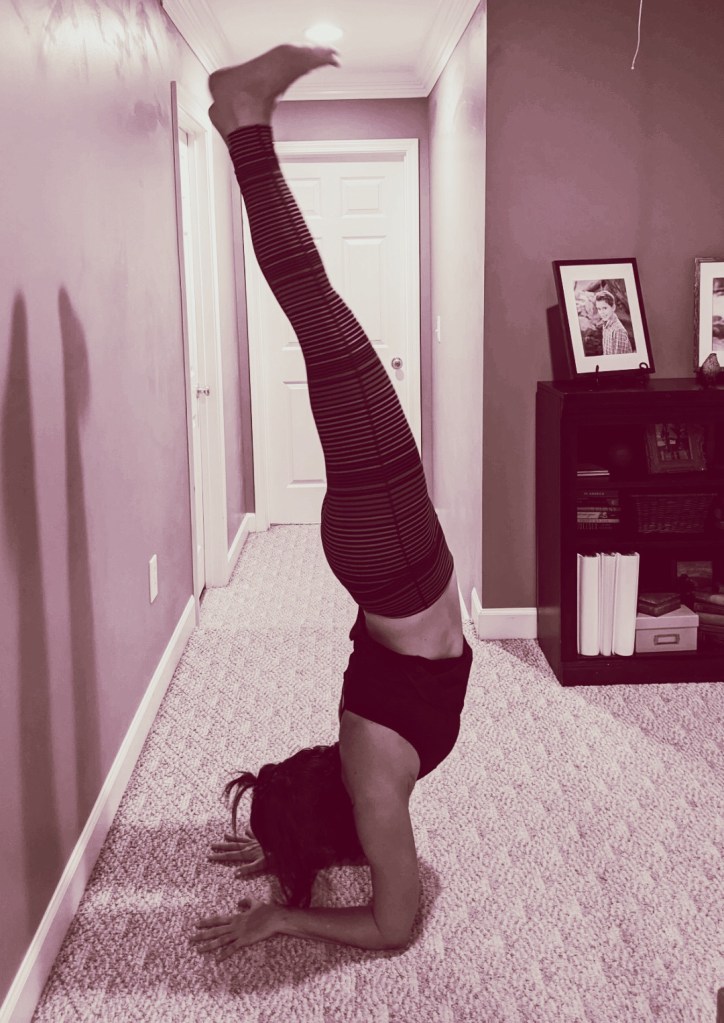
One pose had eluded me long before surgery: Pincha Mayurasana, or forearm stand. I had been working on it for two years.
The pose is often associated with courage, concentration and the third-eye chakra.
Whatevs, right?
Keep an open mind!
Pincha Mayurasana requires strong shoulders, arms and abdominal muscles—the last of which I’ve always lacked. It takes tremendous effort to find the sweet spot, but once you find it, the pose suddenly requires very little effort.
Depending on the day, I can find that spot.
That is how I am discovering the connection between body, mind and yoga.
The boys are in their second week of online school, but I’m not ready to let summer go!
I had understandably lowered my expectations for the summer because of COVID-19, cancer treatments, a second surgery, closed beaches, canceled flights, canceled college tours and canceled summer camps.
But I have to say that I’m continuing to enjoy a wonderful summer, even though the school year has already begun.
Really, I am!
We certainly made some adjustments, but the summer was still filled with family, friends, beach trips, girls’ weekends, a couples’ weekend, plenty of grown-up lunches and even a surprise 50th birthday celebration.
Yep, I turned 50!
I can honestly say that a day or two will sometimes pass without the word “cancer” crossing my mind.
It always finds its way back, but I’m better able to manage those thoughts. Cancer no longer has the hold on me that it once did.
I’m doing everything I can to care for my body, mind and soul. That has to be enough for now.
I have things to do!
My doctor’s appointment went as expected, with no new developments. I’m still taking Tamoxifen and will continue for at least the next five years.
The side effects are either diminishing, or I’m learning how to live with them.
While AJ and I were out to lunch last Saturday, our server greeted us with a smile.
Mid-sentence, he did a double take. There was an awkward pause and then a long stare at my chest. This server, half my age, was gawking at my…
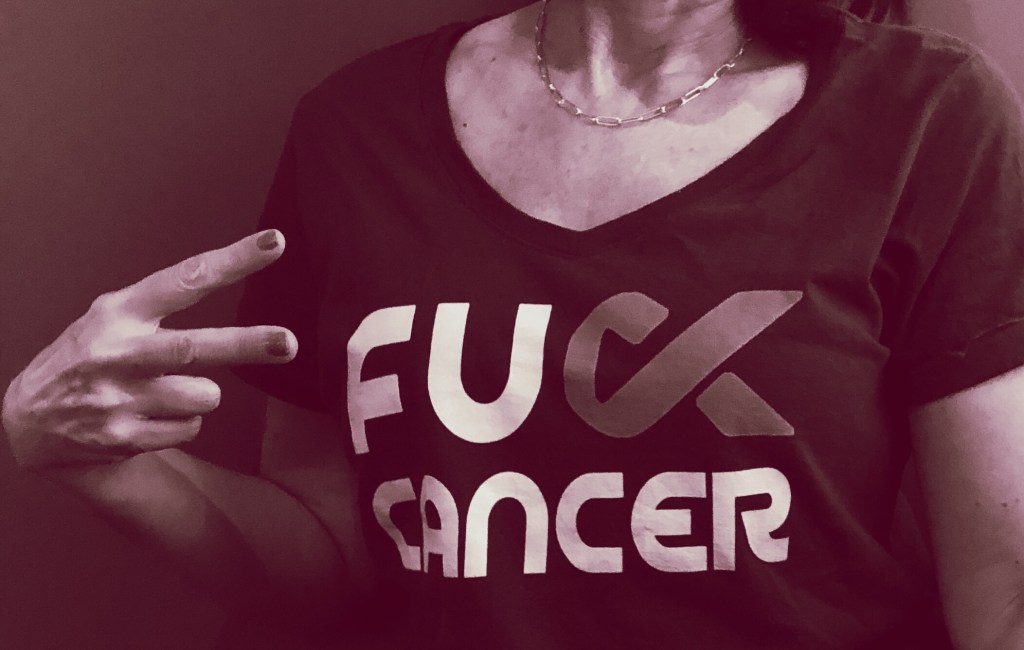
T-shirt.
“What does your shirt say?”
“F#%! Cancer.”
I told him my story. I’ve told it many times, but it still feels awkward and clunky—almost as though I’m speaking in the third person and replacing “she” with “I.”
Surreal.
The server praised me for my courage and called me a warrior.
I felt like a phony.
Warrior. Fighter. Survivor. Battle.
There is so much war terminology surrounding cancer. I’m quiet and more of an observer. I’m not aggressive—unless provoked.
Simply put, I feel as though I have only one choice: to keep moving forward. These days, I categorize my life as before and after my diagnosis.
July is my birthday month, and I am 50!
It’s a fun number to be, and I’m celebrating all summer. I’ve enjoyed visits from Shelby, my brother and Cheryl; a beach trip with both of my nieces; a girls’ trip to Savannah; and a trip to Charleston to visit my sorority sister.
Oh, and there was also a wonderful surprise 50th birthday celebration!
I’m doing well and feeling good. Sometimes, I even forget I have cancer.
Sometimes it takes a while for the blessing in a situation to reveal itself, but I immediately recognized that the stay-at-home order could be good for me.
Without carpools, after-school activities, tutoring, errands and routine appointments, I have time to concentrate on my health.
That feels especially important because my test results took much longer than the 10 days originally promised. Those results would help determine the next step in my cancer treatment.
I tried to view the delay as extra time to prepare for whatever came next—and as time when I could protect my immune system during a pandemic.
A blessing.
I should also add that on some days—many days, actually—the word “cancer” leaves my mind. In its place, I find room for relaxing, watching, reading and simply being.
I’ve gradually regained my strength through walking, biking, a little tennis and even running a mile or two.
Last week, I finally received my results. I’m still absorbing the news.
My recurrence score was low, indicating that chemotherapy was unlikely to provide enough benefit to outweigh its risks and side effects.
No chemotherapy for me!
It was a surprise to all of us, including my doctors.
My treatment plan includes close monitoring, follow-up imaging as recommended and hormone therapy to reduce my risk of recurrence. At this moment, there is no evidence of cancer, and I am deeply grateful.
I still have a couple of surgeries ahead of me. I don’t yet know when they will happen, but I will share more when I do.
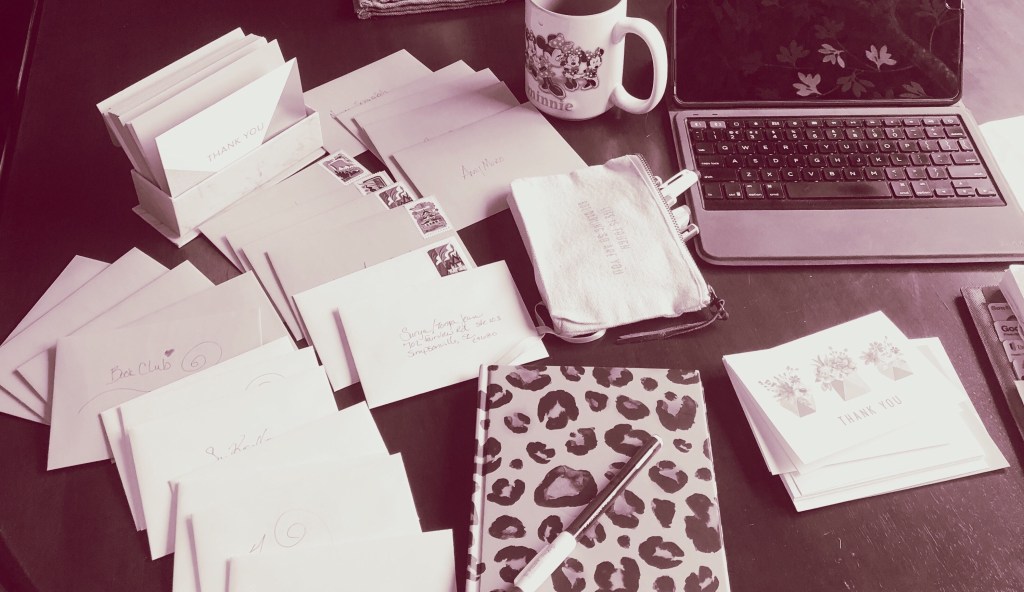
Until then, I have so much to be thankful for—and I’ve already gone through two bulk-sized boxes of thank-you notes!
This morning, we had to cancel a visit from my sister-in-law and niece in Virginia. It was disappointing but necessary.
This is the third family visit we have canceled in the past two weeks because of the coronavirus. Other than taking walks, I have not left the house. My children are home too—no school, music, tennis or friends.
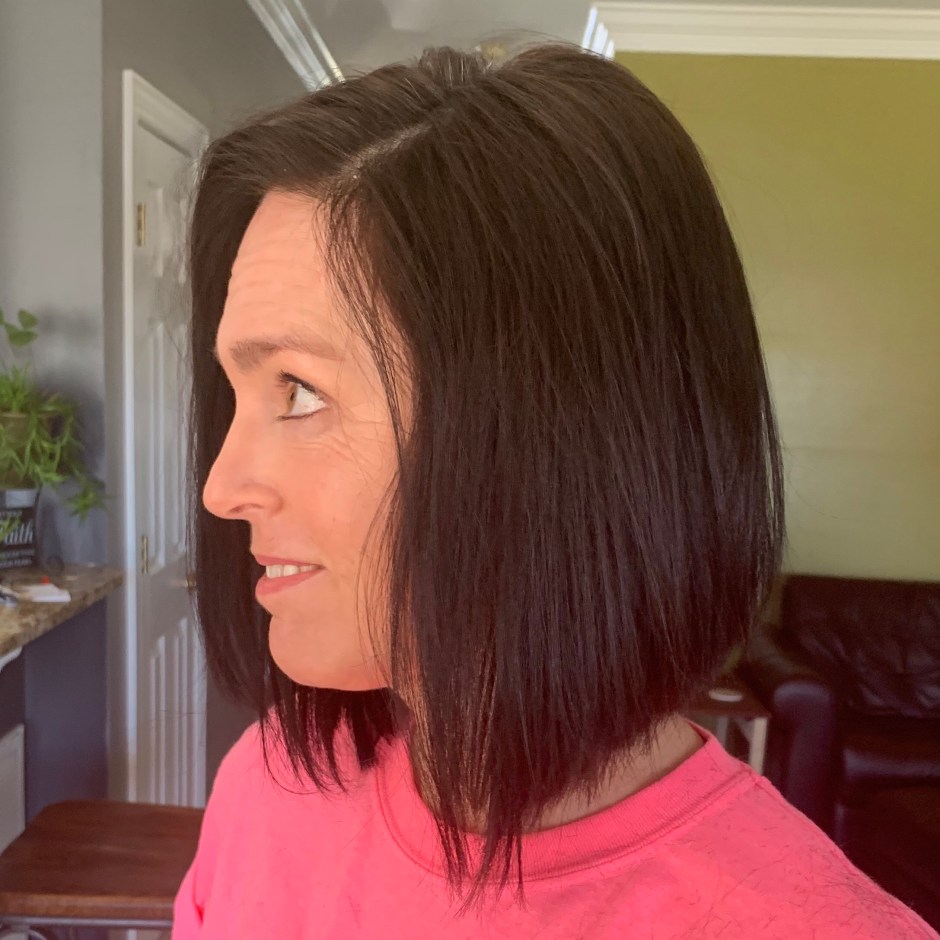
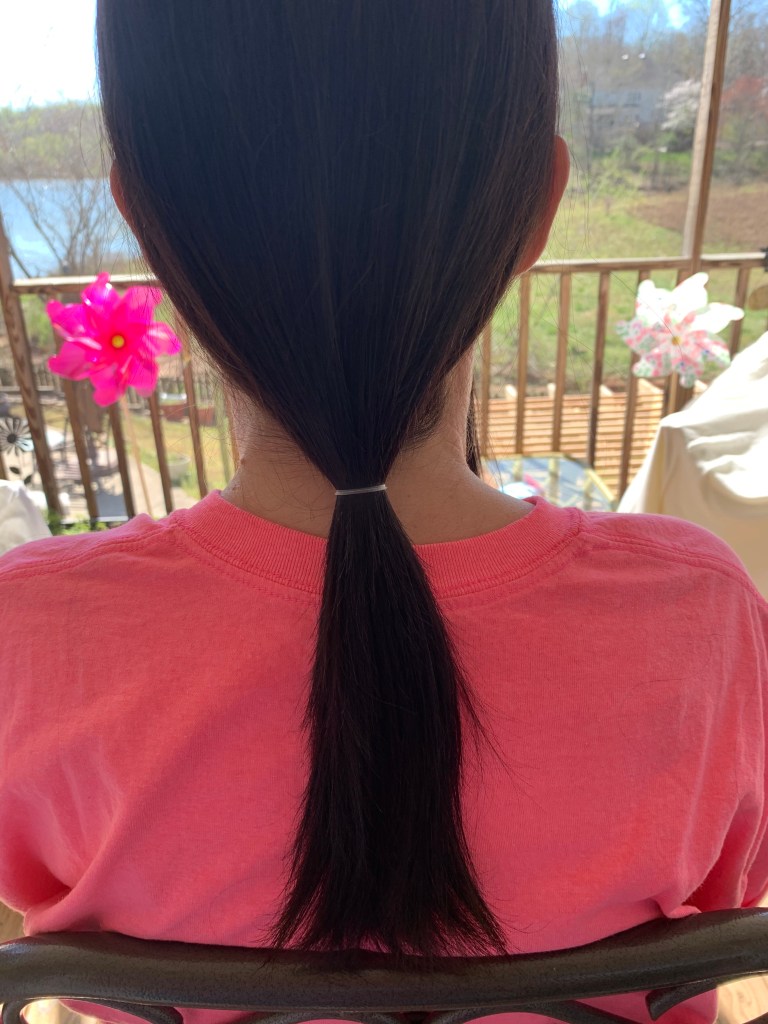
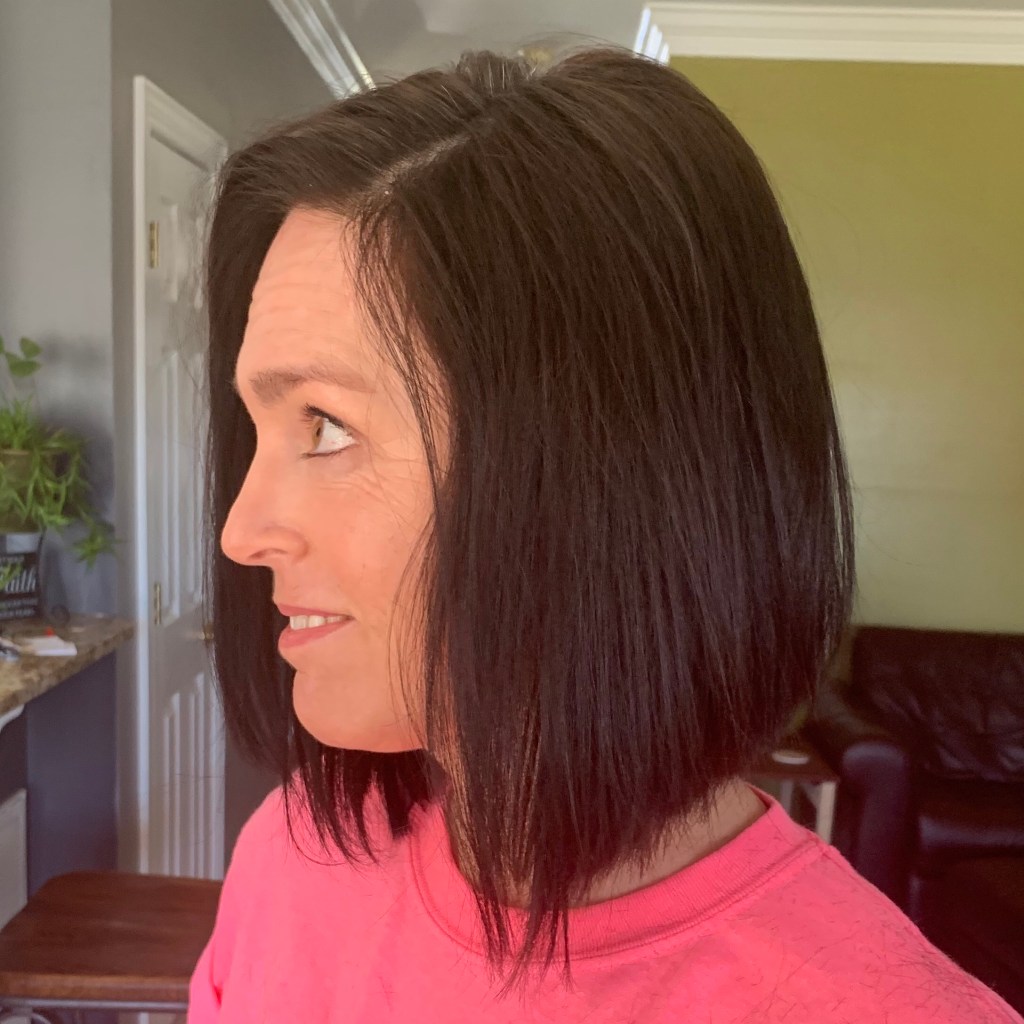
Bored, I went down a YouTube rabbit hole of do-it-yourself haircuts.
Knowing I couldn’t pull this off by myself, I enlisted a friend who arrived wearing a mask and gloves. We sat on the back porch, watched a couple more videos, sectioned my hair and started cutting!
I’m caught in another waiting game: waiting for pathology results.
Because I chose to have my surgery through a different hospital system, there was some miscommunication and a delay in sending my results. What would typically take about two weeks is now taking four.
As I have mentioned before, my definition of time has changed since my diagnosis. I’m continually reminded that this is a “slow-growing” cancer, but I can’t say that puts my mind completely at ease.
Tick. Tock.
Pathology
My pathology sample will be used for Oncotype testing, which examines the activity of certain genes in the cancer tissue. The resulting score will help my doctors estimate the likelihood of recurrence and whether chemotherapy may be beneficial.
We already know that my cancer is estrogen-receptor-positive and that hormone therapy will be part of my treatment for the next 10 years.
Healing
I’m standing much more upright, and today I walked two miles—my farthest distance so far.
It seems I can walk well every other day. The following day, my back pays the price.
“No pain, no gain.”
My incisions are healing, but my abdomen is still very tight. Imagine filling your stomach with air and stopping in the middle of a breath. Tight!
My DIEP flap surgical sites are healing, and some sensation is beginning to return. For now, there is a great deal of tingling as the tissue and nerves heal. At times, it feels as though my shirt is made of sandpaper.
As uncomfortable as it feels, I’m told this is a positive sign.
Blessings
There are too many to count: family, friends, neighbors and all the mail. I’ve read every card more than once.
My meal train keeps my boys fed and my kitchen clean. My parents are “parenting” the boys, handling grouchy mornings and providing miles of taxi service.
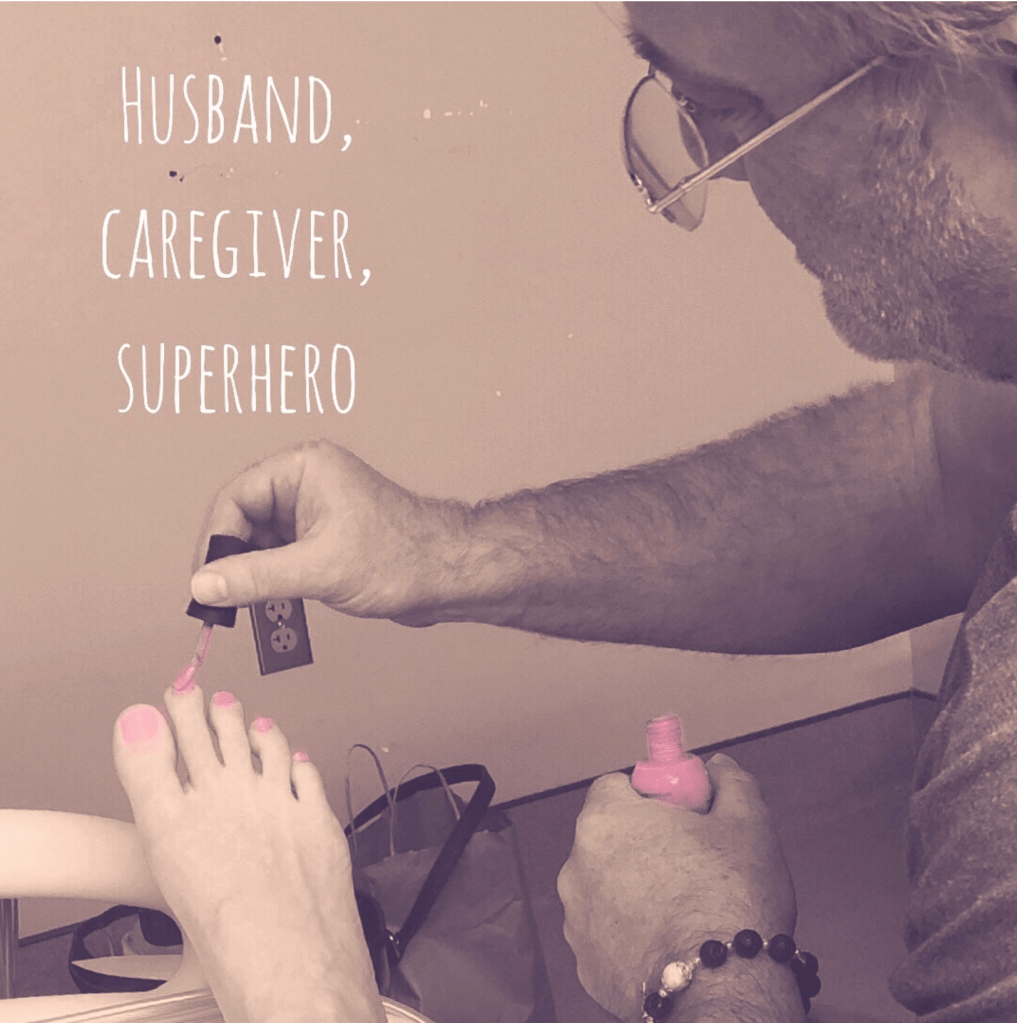
My husband tends to my wounds and remains at my beck and call with icy water, hot coffee and middle-of-the-night pillow adjustments.
He even vacuumed today.
Yep, I can’t say I have much to complain about!
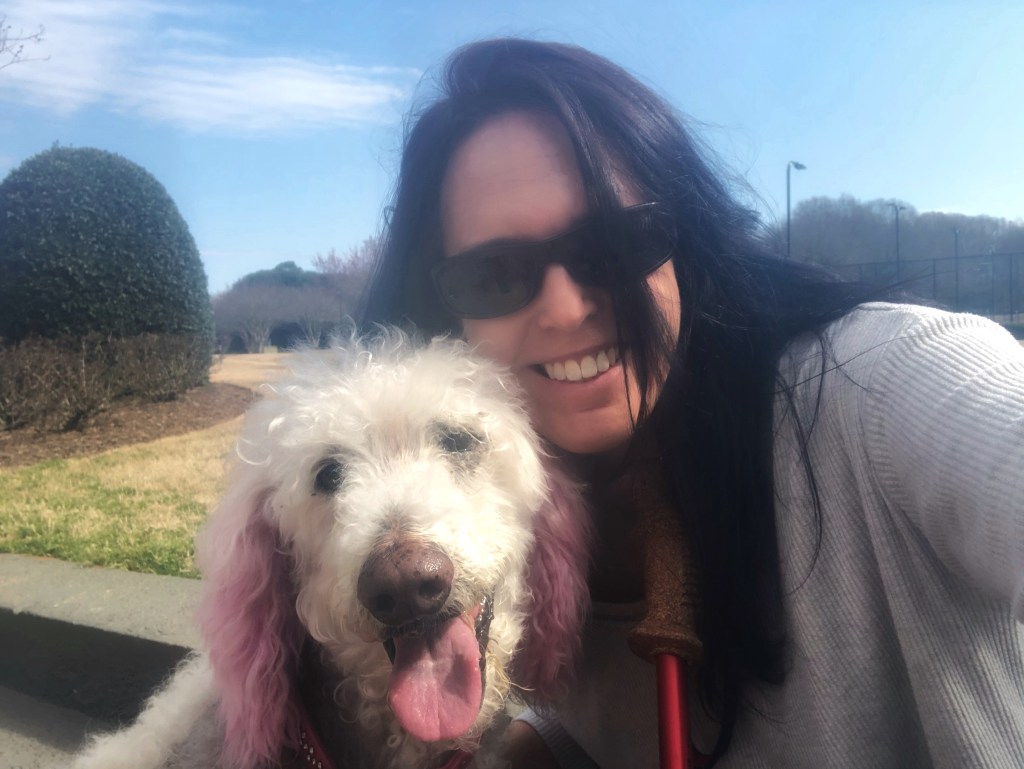
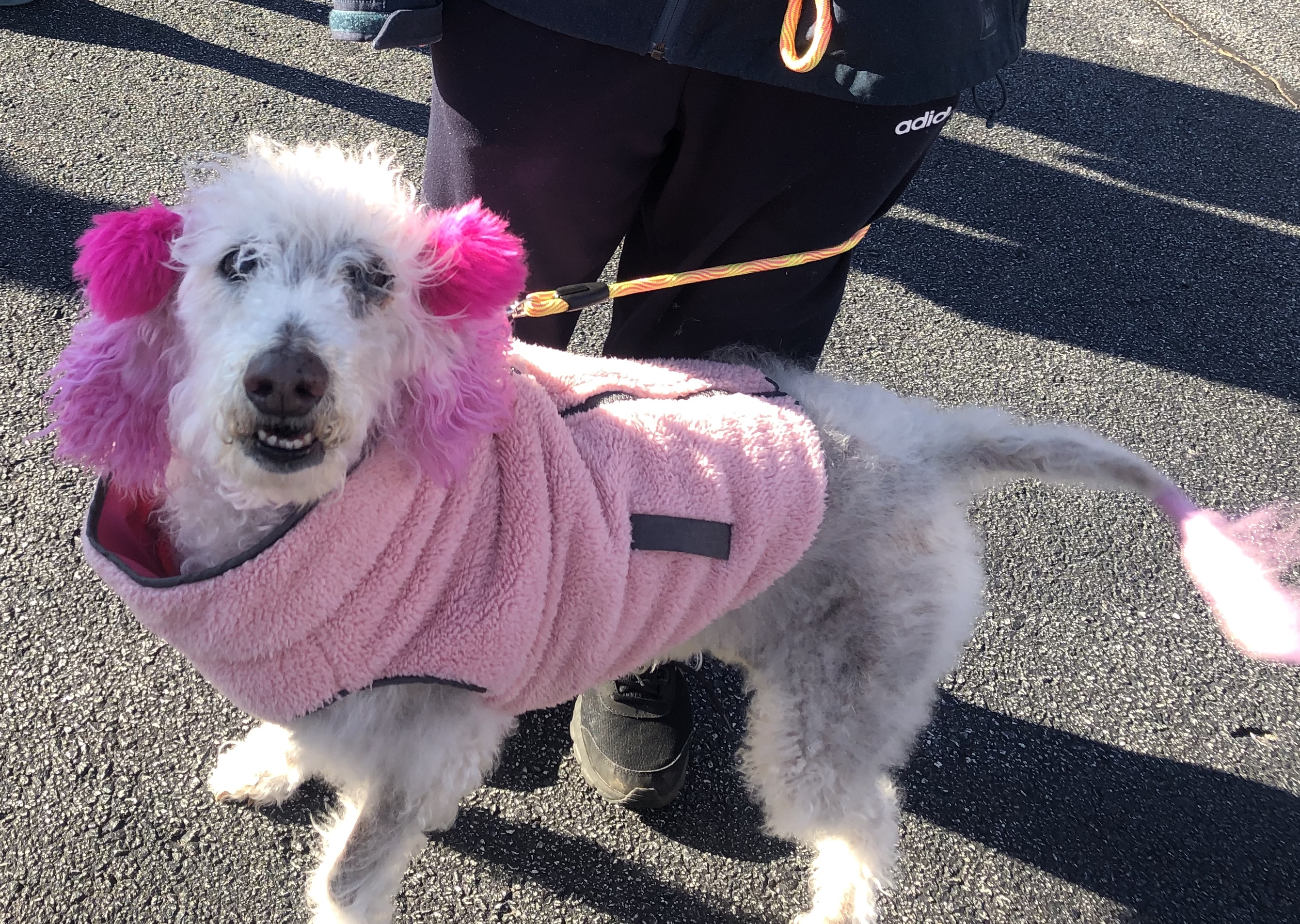
Walking with Petals, my 13-year-old pooch—loyal and never far from my side.
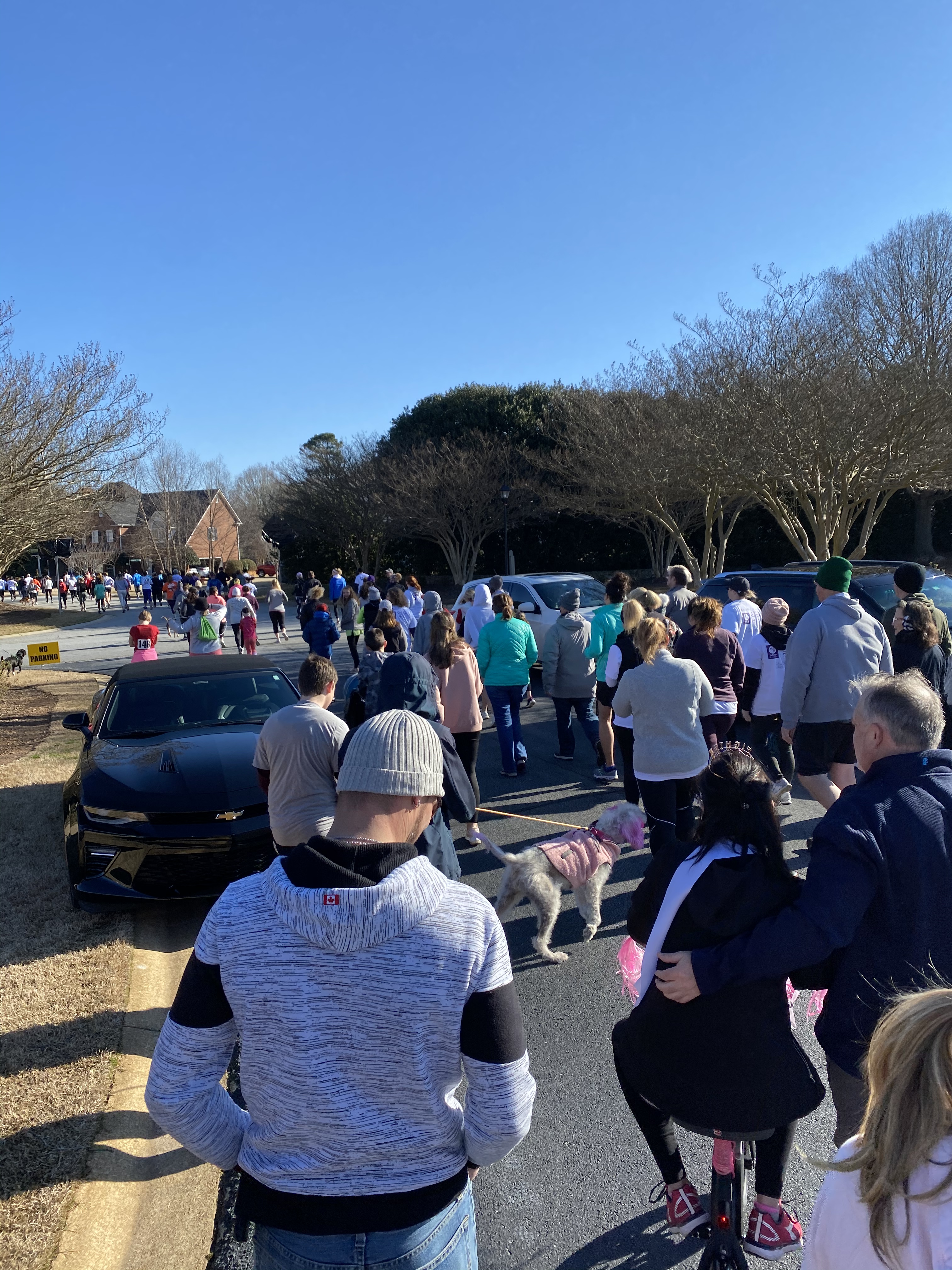
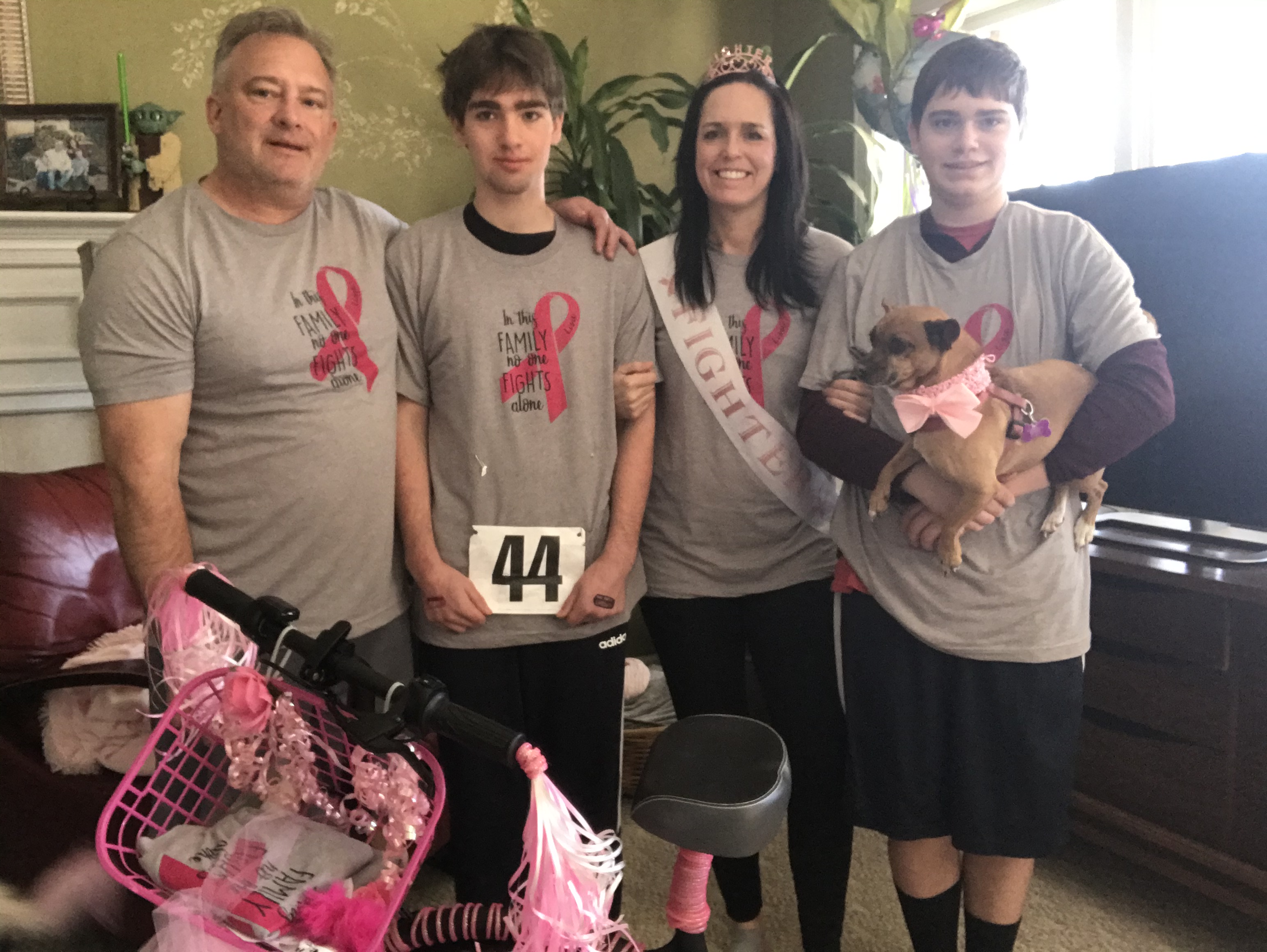
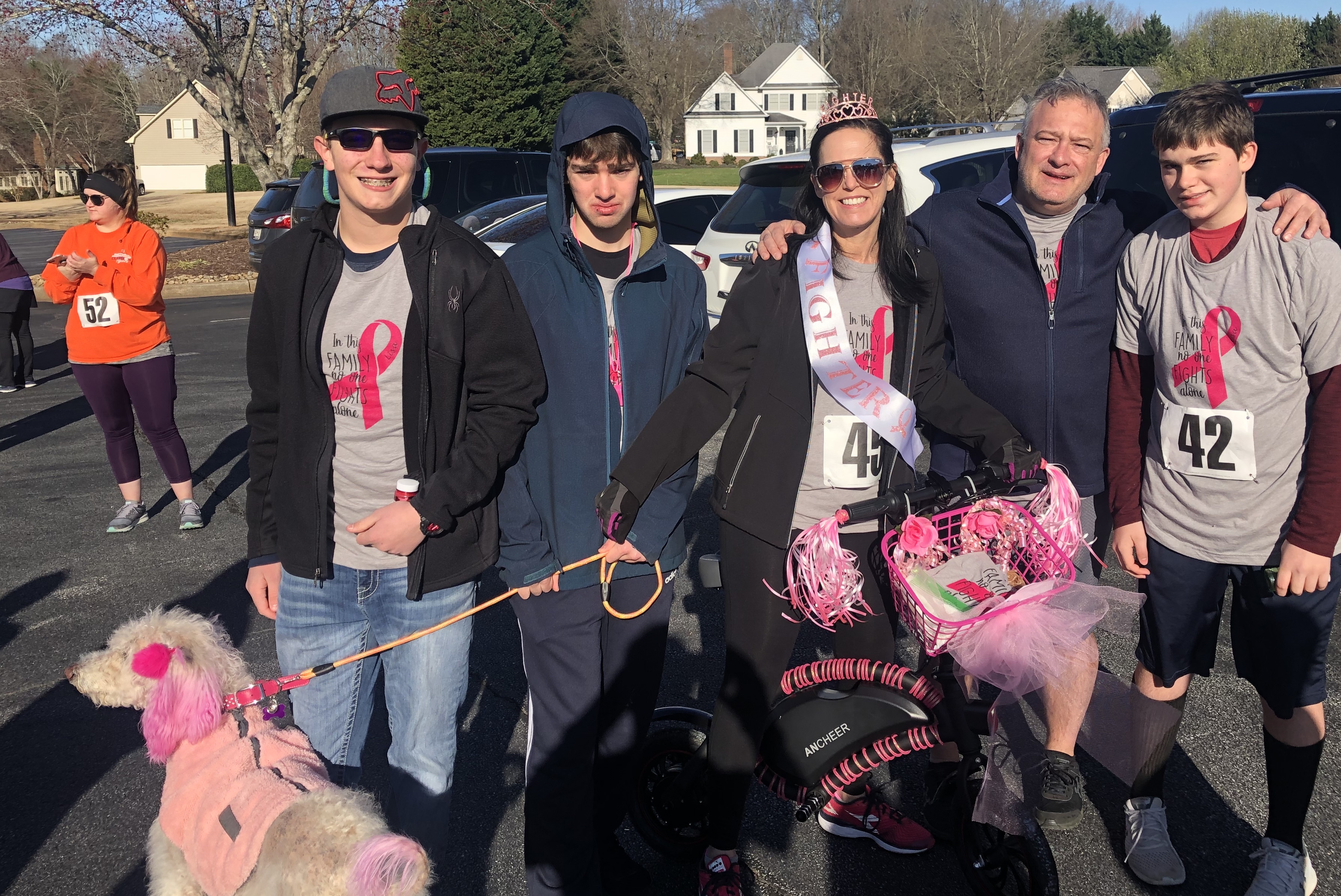
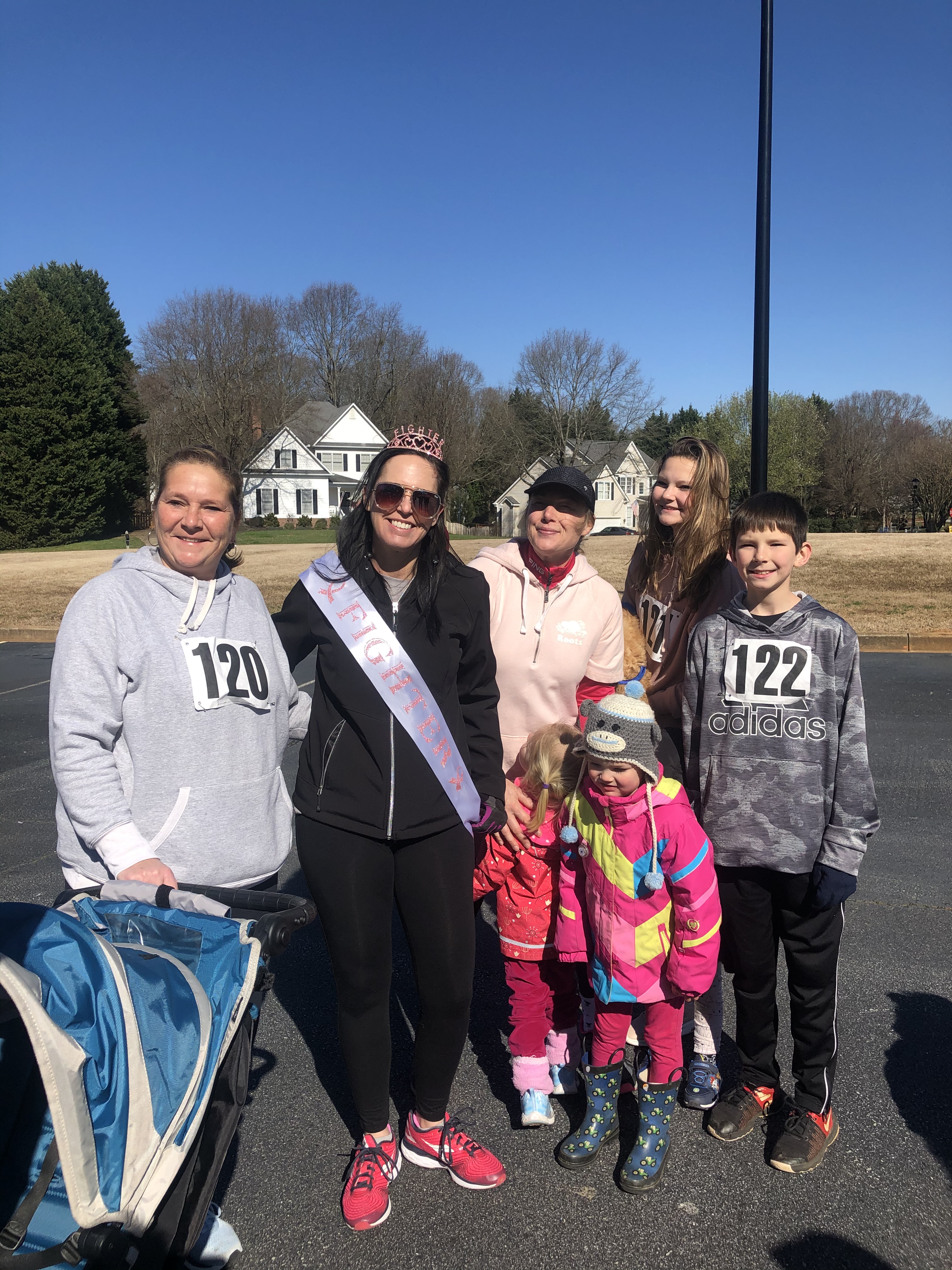
Saturday morning, I laced up my running shoes, ready for the Crush Cancer 5K.
I’m a runner. I simply love to run, and I’ve run countless miles. Only two weeks after surgery, I knew I couldn’t walk—let alone run—most of the distance, but I was going to do it anyway.
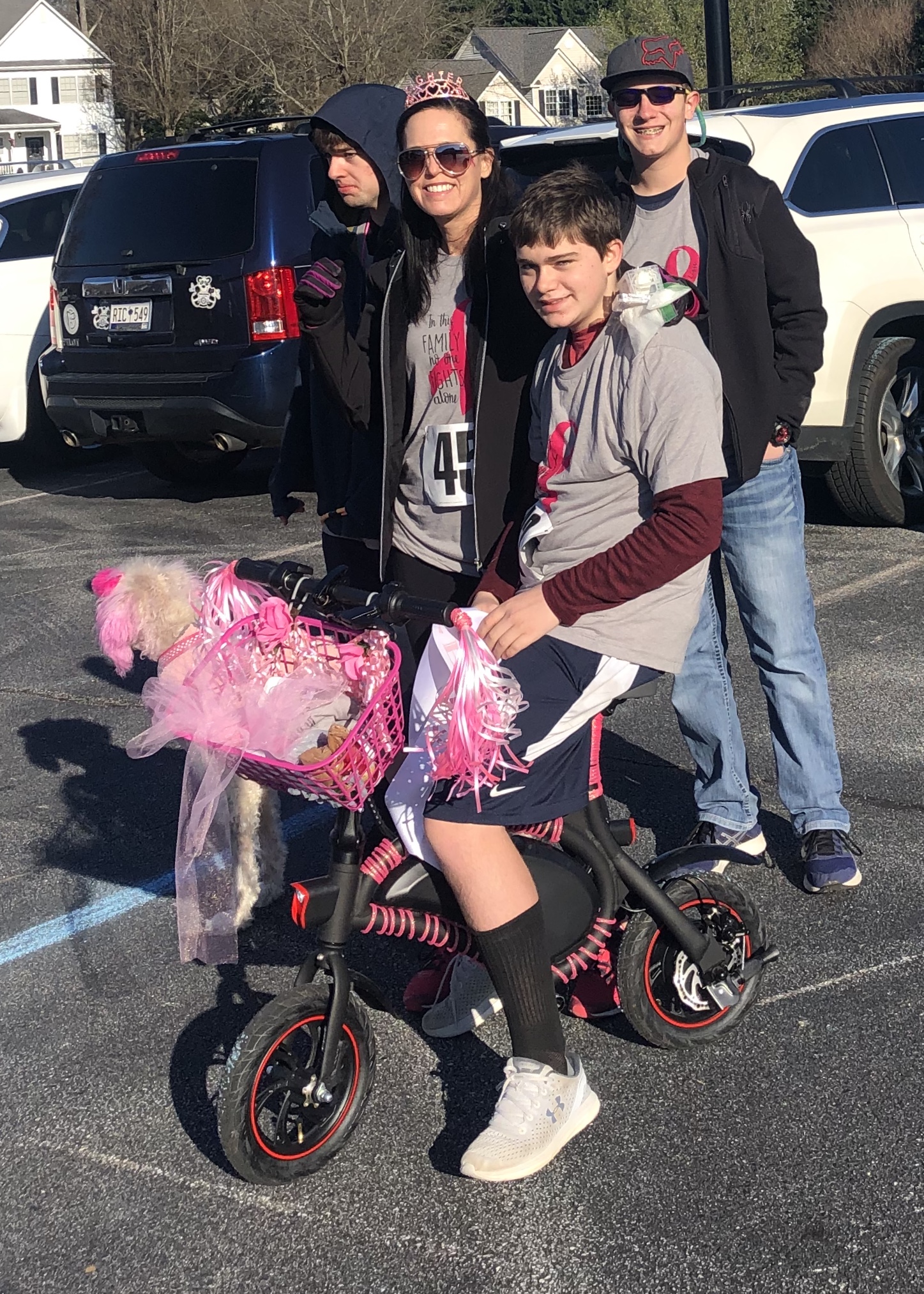
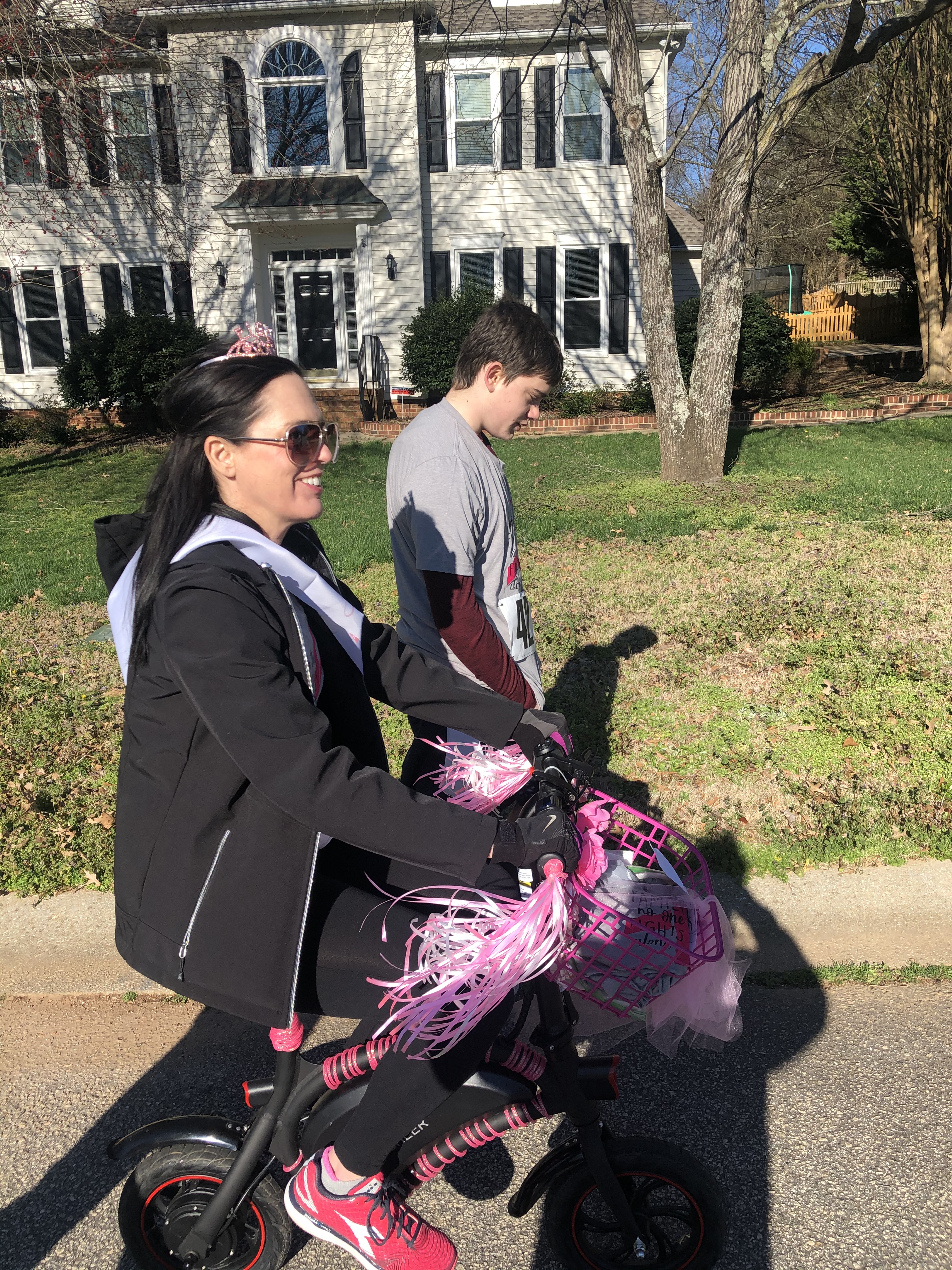
With special permission to “cheat,” I completed most of the 5K on an electric bike.
I looked like a Shriner clown in a parade, but I didn’t care. I was determined to be part of this community and support the cause that brought us all together. Cancer has affected everyone in one way or another.
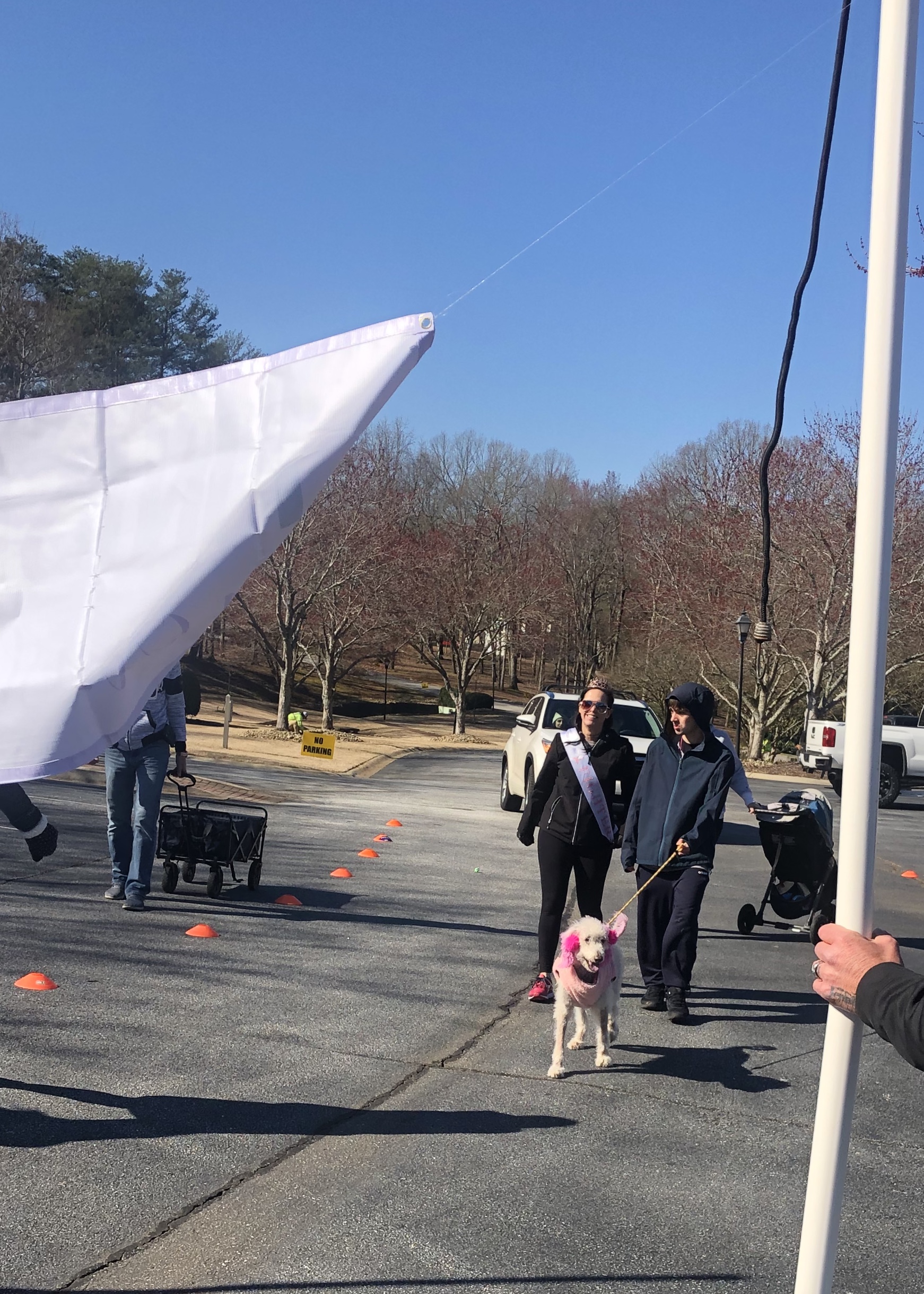
I “ran” with my family, friends and neighbors. I walked the final portion of the 5K with my big boy, Justin, and Pink Petals.
Sure, I was the last person to cross the finish line, but next year I plan to place!
Once it was over, I was exhausted, but I had a wonderful time. I spent the rest of the day cozied up in front of Netflix.
Saying it, writing it and even thinking it feels shocking, awkward and difficult. I know the person receiving this information often feels much the same.
The purpose of this story is not to explain whom I chose to tell. It is to acknowledge the simple fact that I had a hard time saying, “I have cancer.” I also want to share the reactions and responses that brought me peace—the ones that reminded me I wasn’t alone.
Telling my family was extremely difficult. It was Christmas, and our house was filled with people whose experience with cancer was still all too recent because of the loss of my brother. The holidays are a bittersweet reminder that he is no longer with us.
We chose not to share my diagnosis until after the holidays. It was difficult, and at times I had to leave the room with a lame excuse, but I can honestly say it was one of the best holidays we’ve had.
Somehow, peace and relaxation settled over all of us. What is usually a hectic time found us spending entire days together on the back porch—just being together.
Telling my closest friends was also hard. I overthought every detail, primarily because I wanted to make it more comfortable for the person receiving the news. I don’t know why.
In my mind, I rehearsed it. Should I say it by phone, by text or in person?
I couldn’t say the “C” word. I found myself using phrases like, “My biopsy wasn’t good,” or “I’m having a mastectomy.” Anything but that ugly word.
How would they react? How would I react?
I didn’t want to cry. I was tired of crying, but I always cried.
With each “cancer reveal,” I felt emotionally and physically drained. I needed a two- or three-day break between each conversation.
There was one friend I especially wanted to tell in person, but she was out of town with family. On Christmas Day, I accidentally sent her a text asking, “How was your cancer?” instead of, “How was your Christmas?”
Freudian slip?
Another friend simply knew instinctively.
It has been nearly three months since my diagnosis, and every day another friend is just finding out. It’s not as though I could send a mass mailing or make an announcement on the local news. Imagine telling a yoga friend just before savasana.
There is never a perfect time.
The good news is that each conversation became a little easier because of the loving responses. Yes, I received a few odd, dismissive or unexpected reactions, but I credit most of those to the shock and awkwardness of adding “cancer” to a conversation.
I hope cancer does not enter your conversations anytime soon. Unfortunately, it may someday. If it does, I want to share the responses that brought me the most peace:
Extra-long hugs.
A loving look.
Reminders of my strength.
Assurances that you will be by my side.
Someone holding my hand.
A joke that cancer has already met its match.
Continued encouragement and regular check-ins.
Most importantly, the “thoughts and prayers” offered hundreds of times. I felt loved each and every time.
A longtime friend stopped by yesterday to chat. No matter how much time passes, our rapport never skips a beat. She is someone whose questions I can always answer honestly, and I want to offer that same honesty to anyone taking the time to read my story.
How am I doing mentally and physically?
“How are you feeling? Really?” she asks.
Mentally
I respond with tears in my eyes. Holding them back keeps the words at bay. It is quiet, and my friend patiently gives me a moment.
“I’m doing really well.”
She understands my tears because cancer has also deeply affected her life. These are tears of relief. The surgery is over, but I will never forget how scared I was during those two marathon months leading up to it.
I was scared of the pain, the recovery and the restricted activity. I was scared of how surgery would change my body, of losing my fitness and, most importantly, of what it could mean for my family.
The surgery is over, and the greatest fear has passed. My future still holds uncertainty and a challenging road, but I am moving forward.
“Fear is only as deep as the mind allows.”
I have faith in God, my oncology team, my friends and family, and myself.
Faith overcomes fear.
Physically
My body is recovering. My surgery involved a bilateral mastectomy, lymphadenectomy and DIEP breast reconstruction, which stands for deep inferior epigastric perforator flap reconstruction. The procedure uses tissue from the abdomen to reconstruct the breasts, with microsurgery reconnecting the blood vessels.
Chest
Since the first day, I have had very little feeling in my chest. It looks a bit Frankenstein-like, but I have not had much pain there. As the reconstructed tissue heals, I’m told I may regain some sensation. For now, there is tingling as everything begins to heal.
Armpits
I have discomfort in my armpits from the lymph node surgery. The incisions are located where my arms constantly move. My concern about lymphedema is greater than the discomfort, so I continue gently moving and reaching.
Abdomen
My abdomen has caused the most pain. I quickly discovered just how involved the abdominal muscles are in every little movement.
I have a 16-inch incision that is sewn very tightly. My stomach feels like a drum. The funny thing is that I didn’t even realize they had made me a new belly button until a few days later, when I was finally allowed to shower.
The incision prevents me from lying flat, sitting straight or standing upright. Almost any position that would normally feel restful is uncomfortable. Thankfully, the pain decreases considerably each day.
I credit some of my progress to my daily yoga practice before surgery—and to my inability to sit still.
Back
As the other pain lessens, my back seems to hurt more. I’m using muscles differently because I cannot stand, sit or lie flat. This will pass, but sooner would be better.
I cannot stand in one place for long, I use a cane to walk and I would do almost anything to feel the stretch of a Sun Salutation. That will have to wait for another day—one still far away.
Seven days after surgery, I completely stopped taking the major pain medication. I now use only ibuprofen, Tylenol and prescribed medication for the muscle spasms in my back.
This has been a long post, so I’ll leave you with words shared by another wonderful friend:
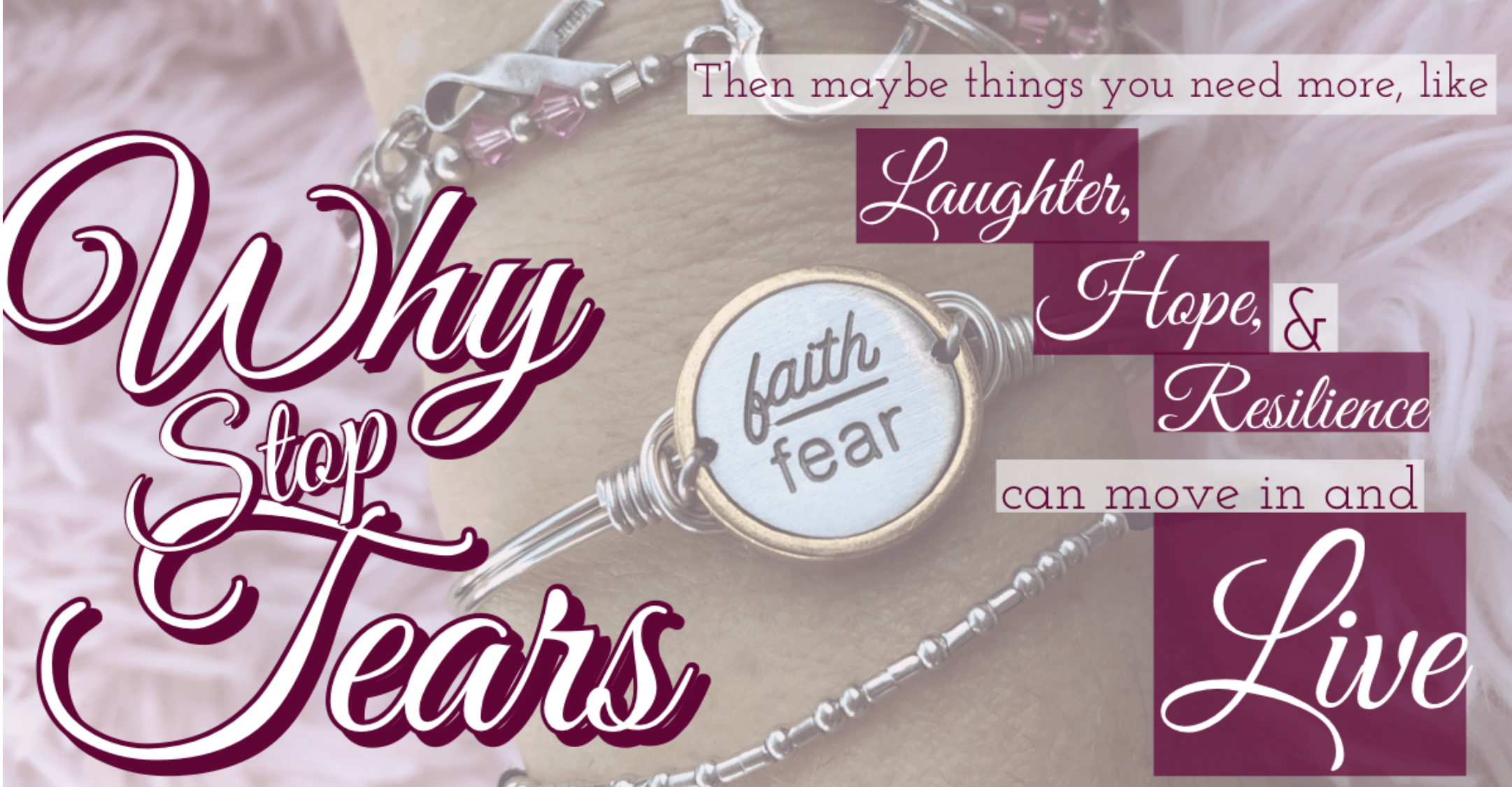
“Why stop the tears if they want to fall? Sorrow, fear and anger are looking for a way out. Why not show them the exit? Then perhaps laughter, hope and resilience can move in and stay.”
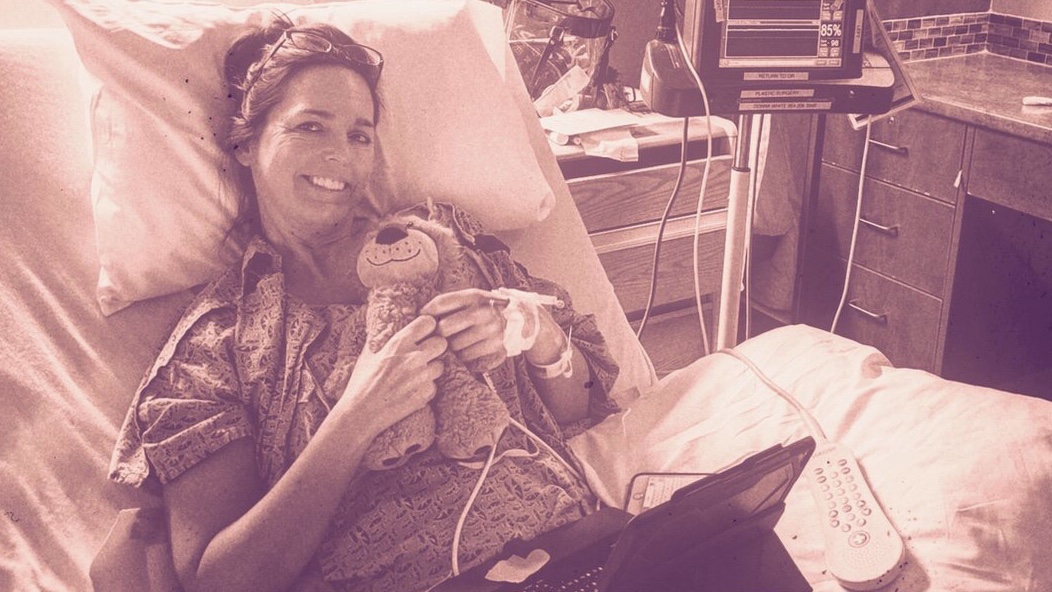
If you’ve noticed, almost every picture I’ve posted has a little lion somewhere in the background. His name, fittingly, is Dan DeLion. I want you to know his story.
My youngest son, AJ, loves lions. He has hundreds of them. In fact, his favorite lion still insists on sleeping with him. Shh…confidential information.
My brother Dan was terminally ill with cancer. Dan and AJ shared a sweet connection. AJ was a rambunctious four-year-old, while Dan was a gentle giant who would read with him, sit quietly beside him and play Nintendo DS for hours.
AJ gave Dan one of his beloved lions as a token of love and courage. A four-year-old recognized that his uncle needed him.
Dan DeLion gave my brother courage through his pain and hospital visits. He was also a constant reminder of the quiet, peaceful moments spent with someone he loved.
Imagine my tears of joy when my sister-in-law, Ana, sent me a care package and Dan DeLion was inside.
I need him. I need his courage, even though my cancer is not terminal.
Lion is my constant reminder to fight and be courageous. He reminds me to cherish the wonderful times with friends and family. Lion is also a promise that there will be many more memories to come.
I’ve been home for almost 30 hours and awake for perhaps four of them.
I’m in good hands. Mom, Bobby, the boys and our friends are allowing time to move forward while I slow down and recover. I slept in the recliner downstairs with B close by on the couch.
It’s early Sunday morning, and I have already made a new friend. Don’t ask me her name, but she is awesome. She is my home health nurse.
I knew she was coming. I planned to wake up early, shower, put on a cute pink post-mastectomy outfit and eat breakfast. I even wanted my medications working their magic before she rang the doorbell.
Instead, I awoke to a stranger smiling over me as I attempted to sit up, half-dressed and wiping drool from the side of my face.
There is no time for vanity.
My nurse, like so many nurses, is a gem. She begins my day by reassuring me that I’m healing.
I’m tired today. Exhausted, really. I take medication for nausea, and AJ wants to watch a show with me, but I don’t even make it through the opening credits.
I will temporarily be walking with a cane. I’m using muscles to stand that my body is not accustomed to using. Two hours later, I take more medication and I’m out again.
Bobby fashions a shower chair for me from a laundry hamper. The shower feels so good that I stay until I’m wrinkly and the hot water runs cold.
Clean body, clean drains and cute pink post-mastectomy clothes. I opt for a change of scenery and spend some time in bed. I attempt to watch another show with AJ, but I can’t resist the comfort of my own bed and once again fail to stay awake.
I miss spending time with the kid. Even while I sleep, he stays.
The day is now turning into evening, and we are waiting for dinner from one of our amazing friends and neighbors. Mom wants to watch American Idol.
Good news! The doctors took me off the IV and later told me I was doing well enough to go home earlier than planned.
Bobby had my things packed in a flash. It still took most of the night and the following morning before I was finally discharged.
We came home to a fabulous welcome from our friends and family. It was so touching that the ugly cry completely took over.
It feels wonderful to be home, but I am exhausted. I’ve already taken several naps, and I also have a home health nurse caring for me. I promise to share more details soon.
My original plan was to sit at the table with my family and play games, but I’m not quite at that energy level yet.
Thank you all for following my story. Please subscribe if you would like to receive my updates.
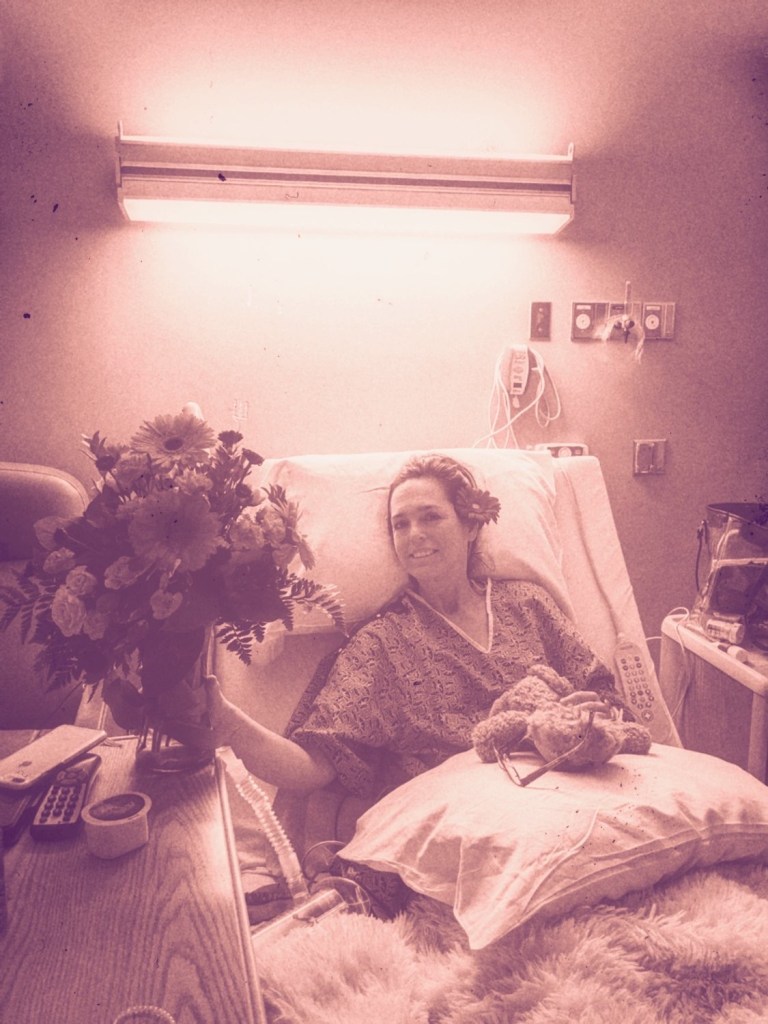
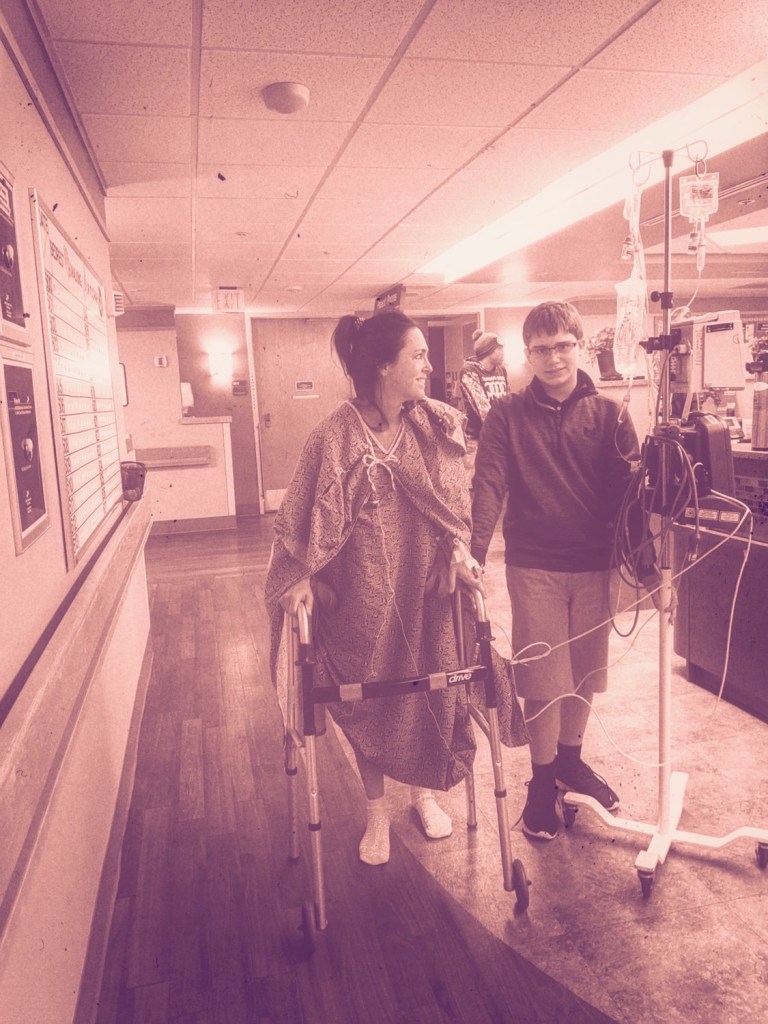
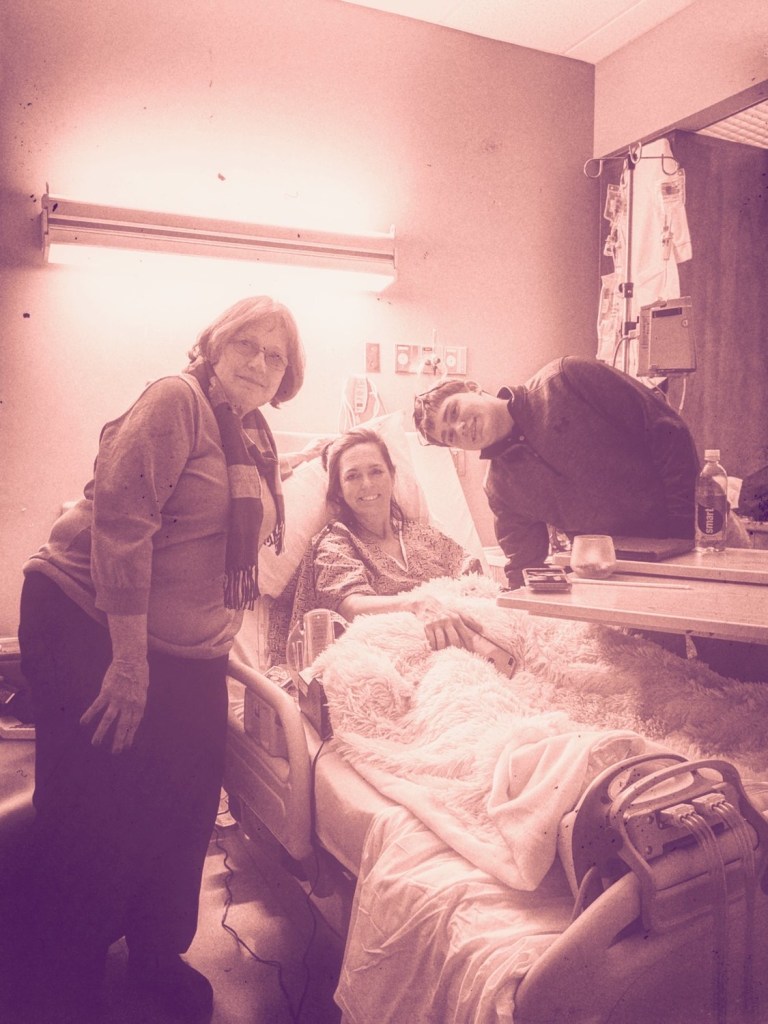
Mom brings the boysMy first walk through the wardFluffy hugs from CanadaGorgeous blooms from OregonAJ is the best escortSierra’s Jar of Joy
We received wonderful news: Only the sentinel lymph nodes were removed. This is a good sign that the cancer has not spread.
Last night, I was able to sleep in three-hour stretches. Throughout the night, the nurses remained vigilant—clearing drains, checking tissue, changing IV fluids, administering countless pills and monitoring my heart rate, blood pressure and temperature.
Regardless of the hour, even at 3 a.m., going to the bathroom is quite an ordeal. Bobby was sleeping so deeply that I resorted to throwing pillows and empty cups to wake him.
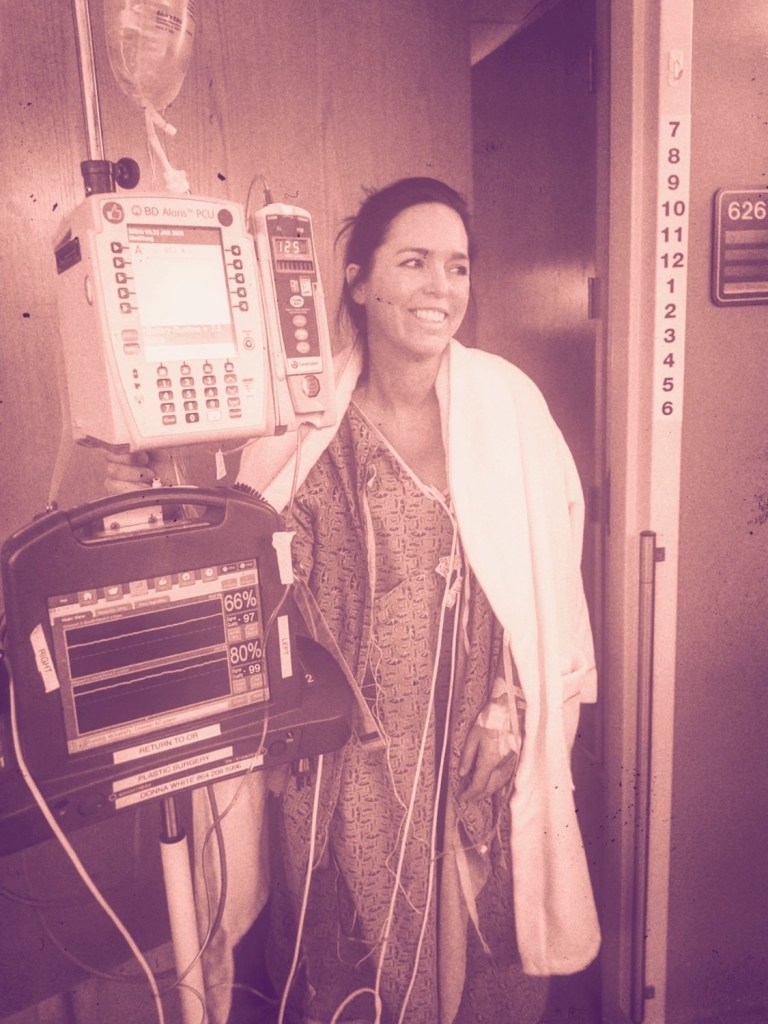
We unhooked cables, leg cuffs and monitors. I gingerly inched out of bed and, shuffling behind my IV cart, made the arduous journey to the bathroom. The journey back is another story in itself.
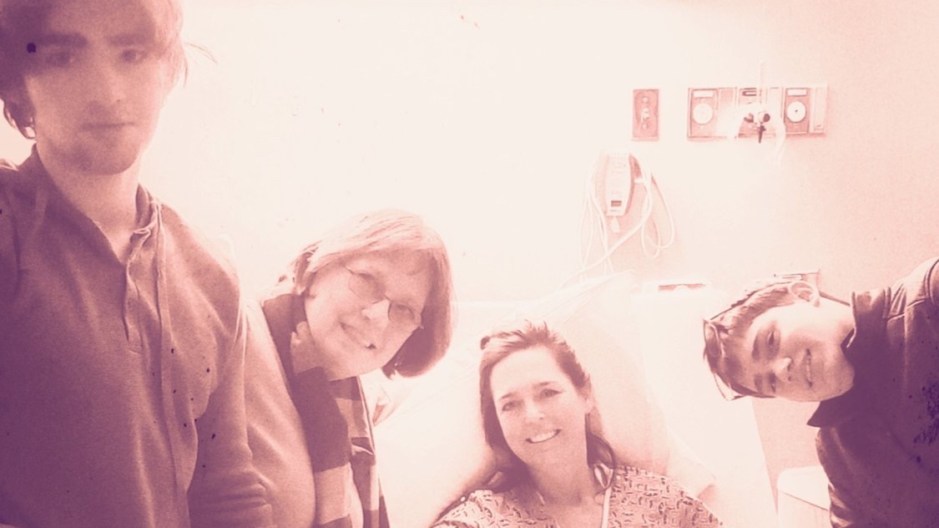
Last night, I received well wishes from so many friends and family members. My mom and the boys came for a visit and brought baskets of gifts filled with love. My boys took turns walking with me through the halls of the ward.
I hope to see them again tonight, but there are weather warnings, and we don’t want them traveling on unsafe roads.
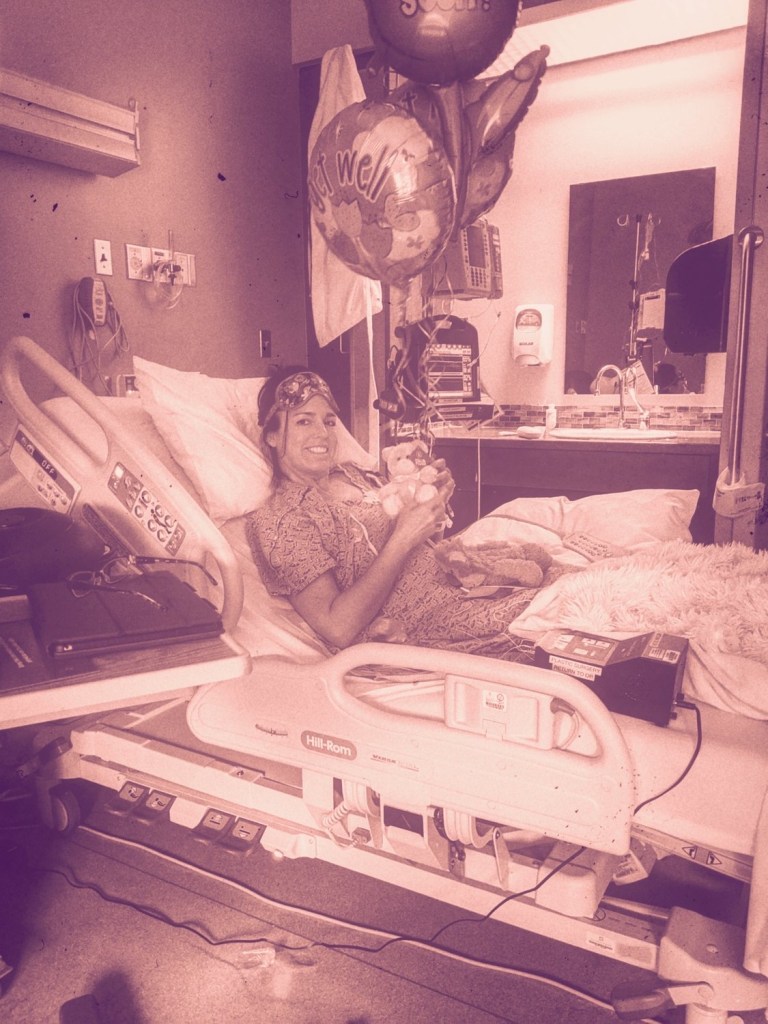
It took some time to get comfortable this morning, but right now I am feeling pretty good. My teeth are brushed, my belly is full, Bobby combed my hair into a ponytail and I’m snug in my bed.
The doctors say I’m healing beautifully and expect me to leave on Saturday or Sunday.
Disclaimer: The second half of this post was written while I was on a cocktail of painkillers and muscle relaxers.
The 3 a.m. alarm was alarming, to say the least. Surprisingly, I slept like a baby. I was in a deep slumber and supposedly snoring.
I hopped into the shower and washed with Hibiclens. I was groggy but felt no anxiety or fear. We headed to the hospital.
I checked in with a smile and made pleasant small talk with the pre-op nurses as they started my IV. My surgeons shook my hand and tickled me with their Sharpie markings. A nurse injected my IV with something to “soothe my nerves.”
Poof.
I was in the recovery room.
Wait, what? Were 8.5 hours already over?
My husband greeted me with a kiss on the forehead, and sweet Meredith gave me a “marshmallow hug.” They were rushed out of the room, and I was left with my operating-room nurse, who did not leave my side. She watched vigilantly, ready to act at any sign that I might need to return to the operating room.
I chose natural breast reconstruction. It is a more complex procedure, but it was the option that best fit my lifestyle and mastectomy. Flap reconstruction uses skin and tissue from the abdomen or inner thigh to reconstruct the breast. Microsurgery reconnects the blood vessels.
For the first 24 hours, the medical team checked the reconstructed tissue every 30 minutes to monitor its blood flow and watch for complications. Needless to say, I did not get much sleep.
It took some time to get my pain under control. Adding muscle relaxers finally helped.
I’m hoping to sleep better tonight now that I won’t be awakened as often.
Today, they want me to stand and walk. It sounds impossible, but I do it—partly because I want to stretch my cramped legs and partly because they are making me.
I stand, bend forward and shuffle. They say I won’t be able to stand upright for two weeks.
Ha! I’ll show them.
I’m hurting a bit now. I think it’s time for another dose.
Mom and the boys are visiting tonight. I hope to be coherent. I’m sure they are excited about the cafeteria. They love to eat.
Thank you to everyone for all the well wishes. I read every single one, and I absolutely love seeing the comment notifications.
As I get older, time moves faster. The years, months and days seem to speed by exponentially. What feels like yesterday was, in reality, long ago.
On December 19, 2019, the clock stopped ticking. Two months ago, a phone call made time stand still. The past eight weeks have felt like two years. For 56 days, I have been stuck in slow motion. For 1,344 hours, one word has occupied my mind: cancer.
Twenty-four hours until my bilateral mastectomy.
My story began on December 18 with a biopsy of my left breast. Other than the discomfort of the procedure, I wasn’t overly concerned. For the past nine years, I have had regular mammograms, sometimes twice a year. I’ve even had a couple of biopsies in my left breast, leaving me with the cutest titanium ribbons to mark a baseline. I was told I have dense breast tissue and that my results should be available within a week.
On December 19, I was in the classroom. Winter break started the next day, and the students were full of sugar and anticipation. Complete chaos.
My phone rang. Odd. I don’t use my phone while at school. It’s never on or even near me. I should just ignore it, but it continued to ring.
Compelled, I stepped into the hallway and answered. The seemingly distant voice said, “Pathology. Pen. Paper.”
My face flushed as I thought, It hasn’t even been 24 hours since the biopsy.
The call was interrupted by a student who handed me a Christmas present and reached for a hug. I returned to the phone and wrote down a number. A class walked by.
“Hi, Mrs. Hockaday!”
“I love your Santa sweater, Mrs. Hockaday.”
“Look at the book I checked out, Mrs. Hockaday!”
Back on the call, I scribbled down words like lobular, invasive, ductal and carcinoma. I started to repeat the phone number back when the Grinch tickled me as she walked through the hallway.
“Merry Christmas, Grinch,” I replied.
I had questions for the person on the phone. I had lots of questions, but I didn’t yet know what those questions were. With that, I pushed the notes deep into my pocket and returned to the classroom, welcoming the distracting chaos.
The day continued painfully slowly. That word repeated in my head again and again: cancer. A decade passed before dismissal.
That evening, I handed the note to my husband, Bobby. He couldn’t decipher my handwriting, and not only was it too late to call, but I had also written down the wrong number. My appointment was December 26. I would have to wait to ask my questions.
We decided to keep the diagnosis to ourselves until after the holidays. We would try not to worry until we knew more and focus on Christmas with our friends and family.
Easier said than done.
Now, 24 hours before surgery, with just enough time to pack my bag and hug my boys, I reflect on “the wait.” As tough and tedious as it was, filled with fear, anger, anxiety, sleepless nights and many tears, I realize the wait was part of the process that brought me to today:
At 49 years old, I never thought I would be fighting for my life. But here I am with invasive ductal carcinoma. I’ve had a lot of time on my hands since my diagnosis—too much time. It has left me with a lot to think about.
I spent the first several weeks asking, “Why me?” I’m an athlete. I have great blood pressure and low cholesterol. I’m a nonsmoker. I breastfed my babies. I generally lead a “clean” lifestyle. On top of my health and choices, my family had already paid our cancer “dues” after losing my 34-year-old brother to cancer.
“Why me?”
The question remained. Was it karma? Was it the underwire bra? I finally asked my neighbor and close friend, “Why me?” She looked me in the eyes and said, “Cancer does not discriminate.” My friend is a seven-year survivor.
Bingo.
“Why not me?”
My number was up. It was my turn.
I am one of eight people I personally know who has or has had breast cancer. Four of us live on the very same street.
“Why not me?”
This change in perspective has drastically helped me bear the last two months as I wait to begin my fight with cancer. I think of the many women out there who are also waiting. I don’t know these women, but I “know” them well—their thoughts, their questions and their waiting.
The soonest surgery date available was two months away: February 18.
I stopped asking why and started mentally and physically preparing for a bilateral mastectomy and whatever treatments might follow. I’ve got a lot to do, and asking why isn’t going to take up any more of my time.







 A longtime friend stopped by yesterday to chat. No matter how much time passes, our rapport never skips a beat. She is someone whose questions I can always answer honestly, and I want to offer that same honesty to anyone taking the time to read my story.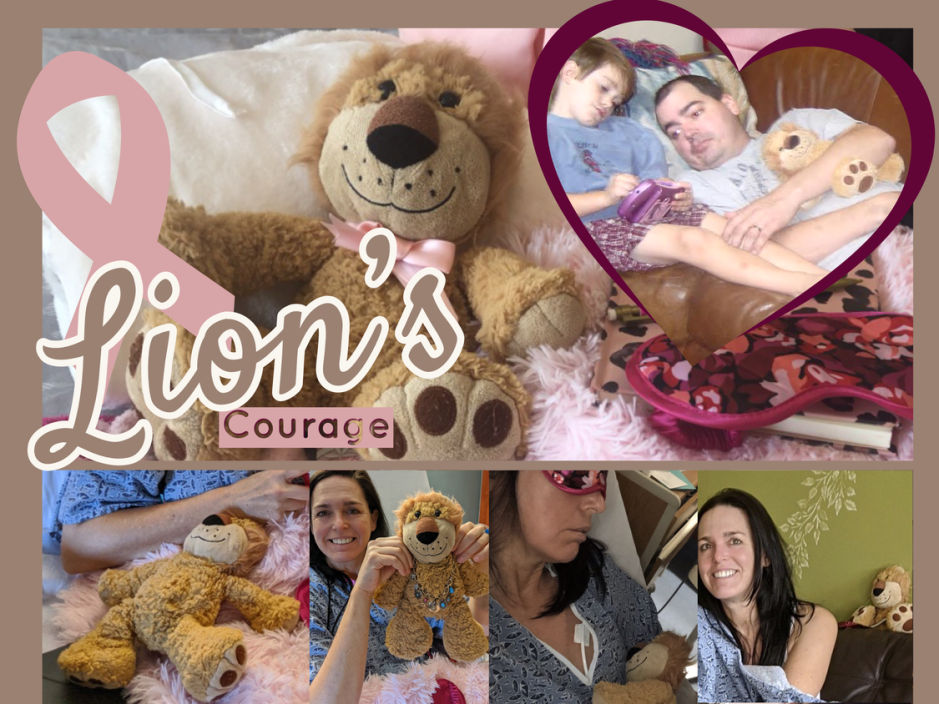
 If you’ve noticed, almost every picture I’ve posted has a little lion somewhere in the background. His name, fittingly, is Dan DeLion. I want you to know his story.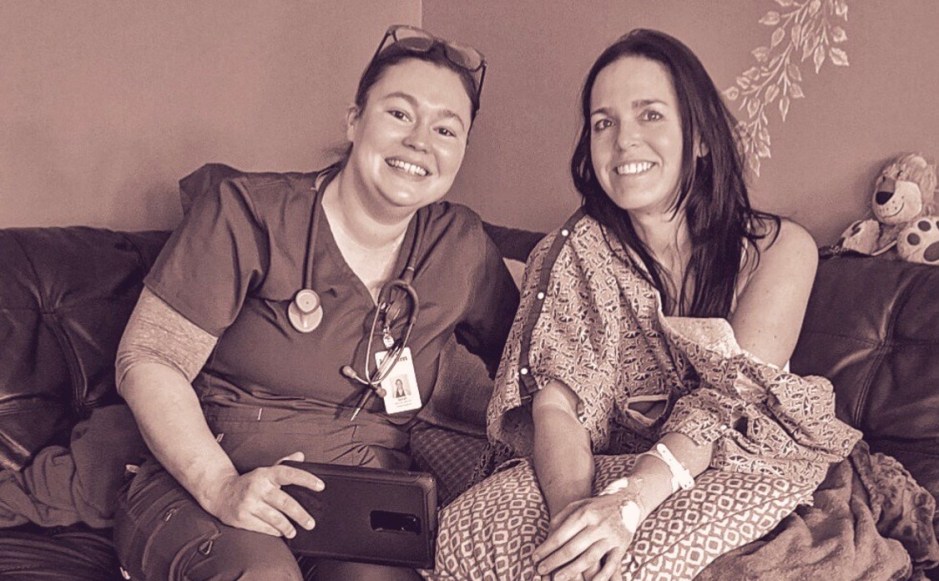
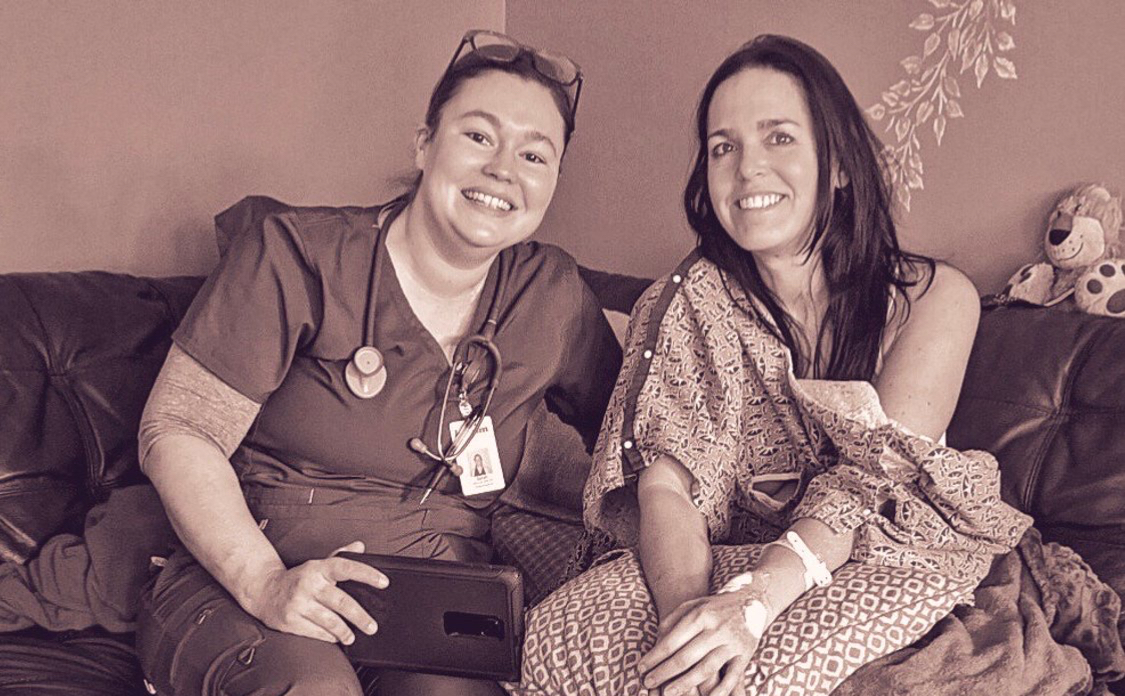 I’ve been home for almost 30 hours and awake for perhaps four of them.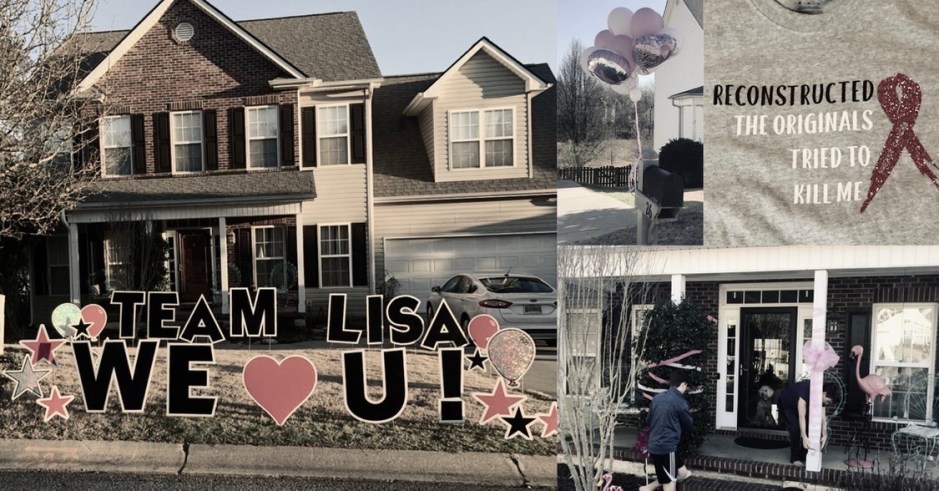
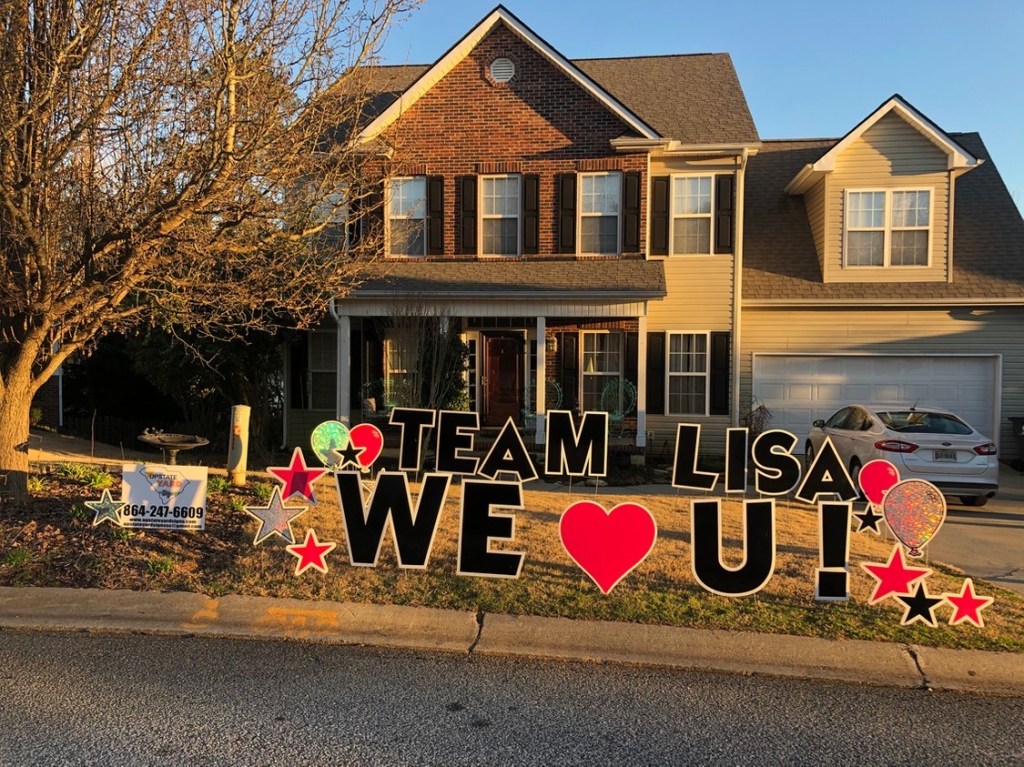


 Disclaimer: The second half of this post was written while I was on a cocktail of painkillers and muscle relaxers.
 As I get older, time moves faster. The years, months and days seem to speed by exponentially. What feels like yesterday was, in reality, long ago.